What Is a Small Business AI Action System?
Executing a reliable small business AI strategy has become a core requirement for staying competitive in 2026. Every week brings hundreds of model updates, workflow connectors, and automated agents that promise to revolutionize your operations.
Most business owners consume this news passively. They scroll social feeds, read sensational tech headlines, and collect trial subscriptions they never actually deploy. This creates tool fatigue, distracts team members, and drains operational focus without generating a single dollar of ROI.
At CodeRift, we have audited more than 100 small business operational workflows in 2026. Over 80% of companies paying for three or more modern AI software subscriptions never integrated them into their standard operating procedures.
Leading small businesses take the opposite approach. They ignore 95% of industry announcements and run focused, low-risk micro-experiments on the remaining 5% that directly impact operational bottlenecks.
By moving from passive headline reading to active, structured execution, you can systematically convert weekly software releases into a widening competitive advantage over slower competitors.
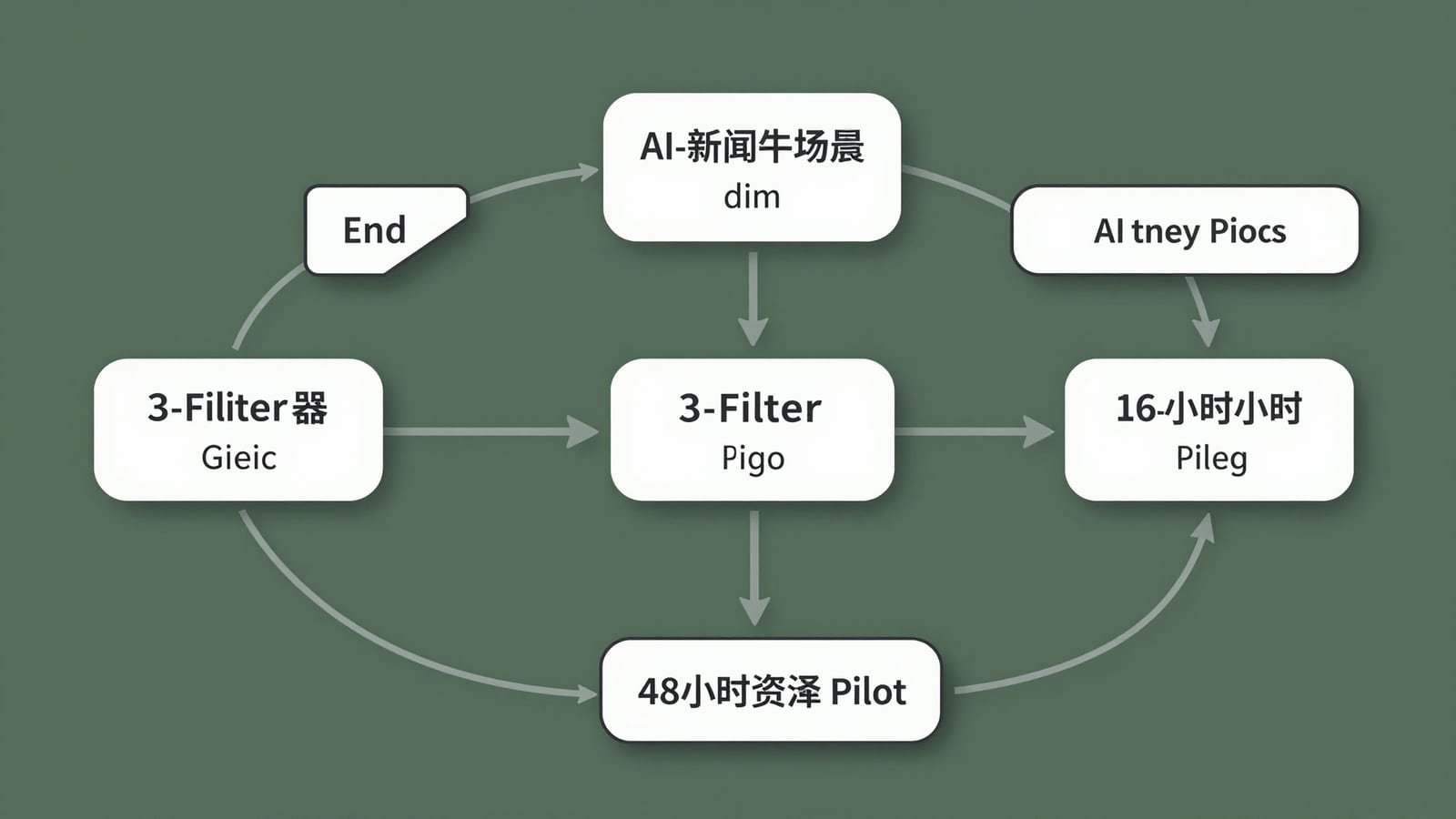
How Do You Sort Real Utility from AI Hype with a 3-Filter Framework?
Learning how to evaluate AI tools quickly requires a strict mental model. When a new model update, agent platform, or workflow assistant launches, run it through three sequential filters before signing up for a trial or briefing your team.
If an announcement fails any single filter, discard it immediately. This ruthless qualification protects your calendar and keeps your team focused entirely on revenue-generating tasks.
Filter 1: Operational Relevance
Does this specific release address an active, documented bottleneck in your customer service, sales pipeline, or administrative back-office? If you do not currently lose measurable time or money on the exact problem the software solves, skip the update entirely.
Never adapt your business processes to fit a shiny new piece of software. Only adopt new tools when they directly eliminate friction in an existing, proven workflow.
Filter 2: Operational Simplicity
Can an existing employee learn the interface, understand the prompt inputs, and achieve an acceptable output in less than 30 minutes? If a tool requires complex prompt engineering or deep structural reconfiguration, it is not built for immediate SMB execution.
Modern software should remove complexity rather than introduce technical overhead. If your frontline staff cannot operate the tool easily on day one, adoption will stall within a week.
Filter 3: Frictionless Integration
Does the update connect directly with your existing customer relationship manager (CRM), billing platform, or email client without custom coding? Practical AI for small business relies on native webhooks, Zapier connectors, or direct workspace plugins.
If capturing value requires hiring external software developers to build custom API middleware from scratch, pass on the release until native integrations become available. You can review our architectural recommendations on our services page to see how we structure frictionless stacks.
Keep a shared spreadsheet titled "Discarded AI Updates" with one-sentence explanations of why each tool failed your 3-Filter test. This prevents team members from re-evaluating the same hyped tools weeks later.
How Do You Build a 30-Minute Weekly AI News System?
Staying informed does not require hours of daily research. A disciplined weekly AI news system requires just one 30-minute calendar block every Friday morning to discover, filter, and assign new capabilities.
Treat this 30-minute block as an executive review meeting. Follow a strict countdown to keep your discovery focused and prevent aimless web browsing.
- Minutes 0 to 10: Scan curated industry roundups. Skip speculative tech blogs, academic papers, and generalist news outlets. Review two or three curated industry newsletters that focus exclusively on SMB operations, commercial automation, and practical software releases.
- Minutes 10 to 20: Apply the 3-Filter Framework. Select the top three announcements from your scan and run them against your relevance, simplicity, and integration criteria. Discard any updates that require heavy custom development or solve problems you do not currently have.
- Minutes 20 to 30: Queue one micro-pilot. Select the single surviving tool or feature update and assign it as a short experiment for the coming week. Define one clear owner and establish an explicit metric for success.
By enforcing this tight time limit, you systematically identify high-leverage software capabilities without derailing your core operational responsibilities. Read more about managing business operations efficiently on our CodeRift insights blog.
How Can Small Businesses Run 48-Hour AI Micro-Pilots?
Once you select an update, do not roll it out across your entire company immediately. Successful implementing new AI releases requires running an isolated, low-risk micro-pilot over a 48-hour testing window.
Micro-pilots prevent operational disruption while providing concrete data on whether a new tool actually delivers time savings or revenue lift in your specific business environment.
1. Establish Safe Testing Guardrails
Never connect an unproven tool directly to live customer databases, active email sequences, or primary financial accounts during a pilot. Use anonymized historical data, internal sandbox environments, or duplicate project boards to evaluate the software safely.
Never paste personally identifiable customer data, internal passwords, or proprietary client records into third-party AI interfaces that lack verified enterprise data privacy guarantees.
2. Define Binary Success Metrics
Avoid subjective evaluation criteria like "see if the team likes the interface." Instead, establish clear, numerical targets that determine whether the tool stays or goes.
- Draft creation speed: Did the tool reduce first-draft turnaround for client estimates from 45 minutes down to 10 minutes?
- Output accuracy: Did the automated categorization module sort 50 test support tickets with an accuracy rate of 95% or higher?
- Workflow acceleration: Did the meeting transcription agent automatically generate accurate action items and sync them to your project board without manual cleanup?
3. Execute the Keep-or-Kill Decision
At the end of the 48-hour window, review the pilot results with the designated tester. If the tool hit its success metrics, document the workflow in a standard operating procedure (SOP) and schedule an official rollout for Monday morning.
If the tool failed to hit its target, cancel the subscription and delete the test workspace immediately. Never leave unused software sitting on your corporate credit card.
What Mistakes Derail a Practical Small Business AI Strategy?
Building an agile AI adoption framework SMB leaders can rely on requires avoiding common operational pitfalls. Many business owners waste thousands of dollars simply because they lack structured evaluation guardrails.
Understanding the difference between reactive hype chasing and a structured execution process will protect your cash flow and team morale.
| Operational Area | Ad-Hoc Hype Chasing | Structured AI Action System |
|---|
| Software Discovery | Random daily browsing on social feeds | Dedicated 30-minute weekly Friday audit |
| Tool Selection | Choosing tools based on viral excitement | Filtering by relevance, simplicity, and integration |
| Testing Method | Immediate full-team rollout on live accounts | Isolated 48-hour micro-pilots using sample data |
| Cost Management | Accumulating recurring monthly trial fees | Decisive keep-or-kill policies after 48 hours |
| Documentation | No written prompts; inconsistent usage | Centralized prompt libraries and team SOPs |
Many software vendors release native AI upgrades directly inside tools you already pay for, such as your CRM, document editor, or email suite. Subscribing to standalone tools that replicate features already present in your core stack inflates software expenses needlessly. Always inspect your existing software subscriptions for newly released features before purchasing a new tool.
Mistake 2: Premature Company-Wide Mandates
Forcing an entire team to switch to a new tool before proving its value creates friction, confusion, and resistance. Always validate the tool with a single, tech-comfortable employee first. When the rest of your staff sees undeniable proof of time saved, adoption becomes natural and voluntary.
Mistake 3: Neglecting Standard Operating Procedures (SOPs)
An AI tool is only as effective as the prompts and context provided to it. If team members use inconsistent prompts, your business output will vary wildly in quality and tone. Document verified prompt structures, context parameters, and workflow steps in a central knowledge base before scaling any tool across your organization.
If you want to review our transparent implementation structures and consulting tiers, check our clear pricing breakdown.

Key Takeaways: Your Fast-Action AI Playbook
- Filter out 95% of weekly news: Evaluate releases strictly on whether they solve active bottlenecks, work without training, and integrate with your current tech stack.
- Limit AI discovery to 30 minutes weekly: Schedule a single Friday block to scan curated SMB summaries and queue exactly one micro-experiment.
- Test with 48-hour micro-pilots: Use isolated environments, anonymized test data, and measurable success criteria to validate tools before making financial commitments.
- Enforce strict keep-or-kill rules: Either document the workflow into team SOPs for a company rollout or cancel the subscription within 48 hours.
- Maximize your existing tech stack first: Exploit newly released capabilities inside your existing CRM, invoicing, and project management platforms before buying new software.
Frequently Asked Questions About Practical AI for Small Business
How much time should a business owner spend evaluating new AI tools each week?
A business owner should spend no more than 30 minutes per week reviewing new AI software releases. Restricting your research to a single Friday session prevents tool distractions while keeping your operations aligned with the latest practical automation capabilities.
How do I prevent team resistance when rolling out new AI workflows?
Prevent resistance by assigning new tools to a single team volunteer during a 48-hour micro-pilot. When the rest of your team sees measurable proof that the tool eliminates tedious manual work without threatening their roles, team-wide adoption occurs smoothly.
Do small businesses need internal software developers to adopt weekly AI releases in 2026?
No, small businesses do not require custom software developers to benefit from modern AI releases. Most commercial tools in 2026 feature zero-code connectors, native workspace plugins, and pre-built automation recipes that non-technical operators can configure in minutes. If an update requires custom development to function, smaller operators should pass on it.
Ready to Turn AI Releases into Measurable Business Revenue?
Staying ahead of software developments while running day-to-day business operations can stretch your leadership team thin. At CodeRift Agency, we help business operators design custom automation systems, eliminate manual administrative waste, and deploy battle-tested workflows that drive measurable revenue growth.
Stop wasting valuable hours guessing which software tools matter. Visit our contact page or book a free workflow audit call today, and let our technical specialists identify your highest-return automation opportunities.