Is Your Website Just Sitting There? The Traffic Problem
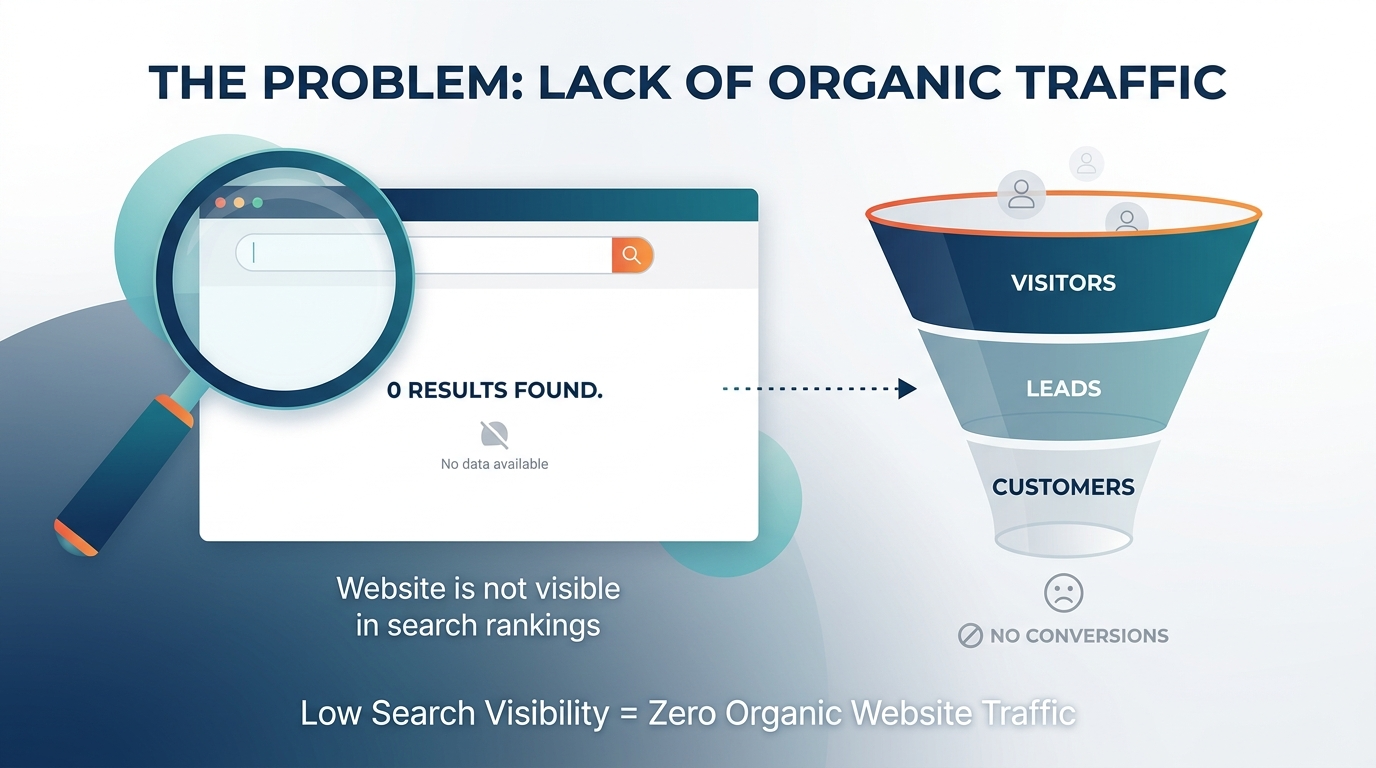
The harsh reality? Most small business websites are practically invisible. A major study by Ahrefs found that a staggering 90.63% of all web pages get no organic traffic from Google. This isn't just a statistic; it's a silent killer of potential leads and sales for countless businesses.
Important Context: An Ahrefs study revealed that over 90% of all web pages receive zero organic traffic from Google. For many small businesses, this means their website is online, but effectively invisible to potential customers searching for their services.
The idea that "just having a website" is enough to be found online is a misconception from years past. While 64% of businesses had a website in 2019, and 70% of consumers learn about new businesses online, simply existing isn’t enough anymore. In 2026, with over 42% of small businesses not investing in basic SEO, their sites are lost in the digital noise.
Your website might be technically "up," but without proper optimization, search engines like Google have no way to find and rank it. This leads to zero organic traffic, meaning fewer eyes on your products or services, and ultimately, a missed opportunity for growth.
Common SEO mistakes are often the root cause. Many businesses skip crucial keyword research, meaning their content doesn’t match what customers are actually searching for. They might publish thin, unhelpful content or completely ignore the technical basics that help search engines understand and crawl their site.
The Speed Trap & Mobile Maze: Losing Customers Fast
Imagine a customer walks into your physical store, but the doors are jammed, or they have to wait several minutes just to get inside. They’d likely leave, right? The same principle applies to your website, especially concerning speed and mobile experience.
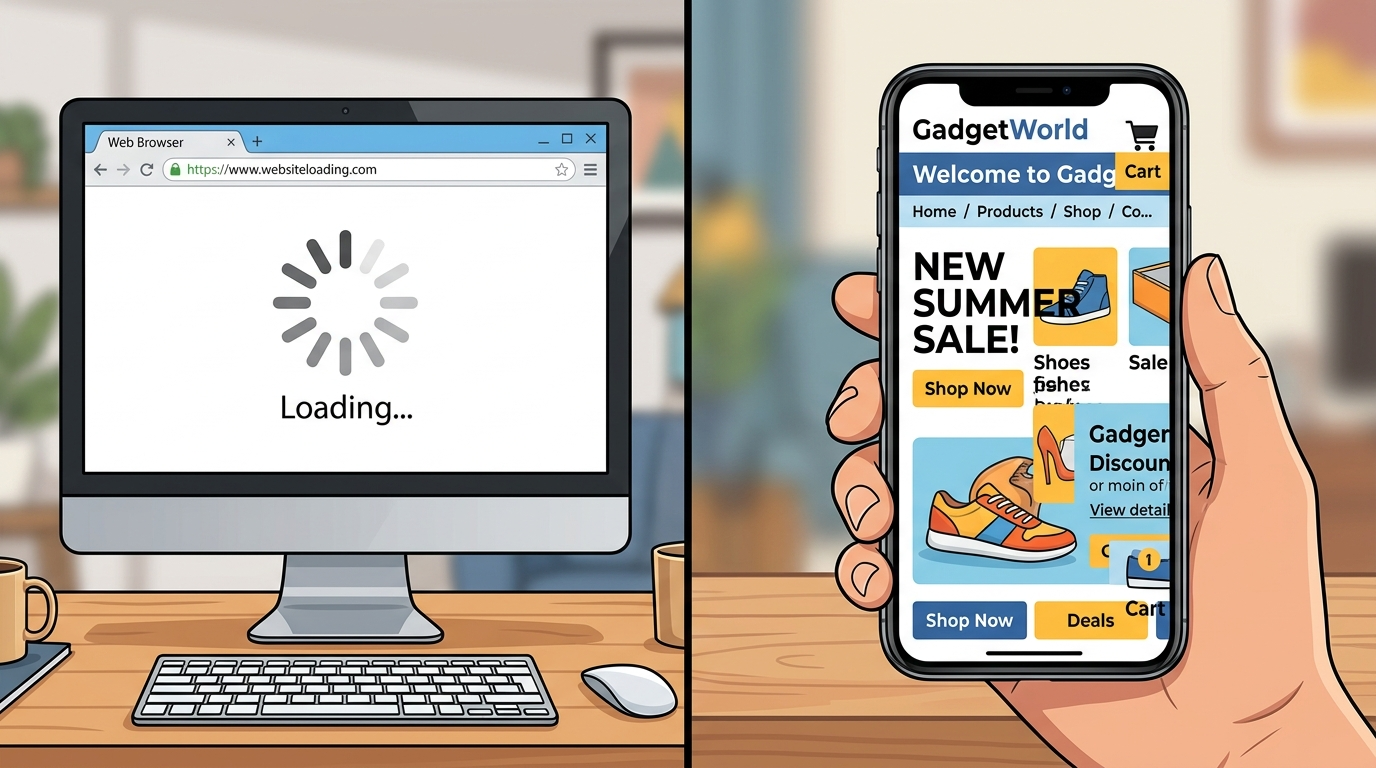
Slow loading times are a major deterrent. Google research clearly shows that 53% of users will abandon a website if it takes more than three seconds to load. That’s more than half your potential customers gone before they even see your offerings. This directly impacts both your search engine rankings and your bottom line.
Common Pitfall: Slow website loading times. Over half of web users will abandon a site if it takes longer than three seconds to load, costing you potential leads and sales instantly.
Furthermore, the world has gone mobile. Over 60% of all web traffic now comes from smartphones and tablets. Yet, many small business websites in 2026 are still not properly optimized for mobile devices. This isn't just an inconvenience for users; it's a critical flaw.
Google’s mobile-first indexing means that if your site isn’t mobile-friendly, it’s actively disadvantaged in search rankings. A poor mobile experience frustrates customers, makes your site difficult to navigate, and ultimately kills sales and inquiries.
Your website needs to be fast and flawless on every device. Otherwise, you're not just losing potential customers; you’re actively pushing them towards your competitors.
No Clear Path: Why Visitors Don't Act
Even if customers find your site and it loads quickly, there’s another common pitfall: a lack of clear direction. Many small business websites fail to tell visitors what to do next.
A staggering 70% of small business websites lack clear calls to action (CTAs). This means a potential customer might land on your page, be interested in your services, but then not know how to take the next step. Do you want them to call? Book an appointment? Request a quote? Buy now?
When visitors don't have a clear path, they get confused, frustrated, and leave. This translates directly into lost leads, missed sales opportunities, and a website that simply isn't performing its job.
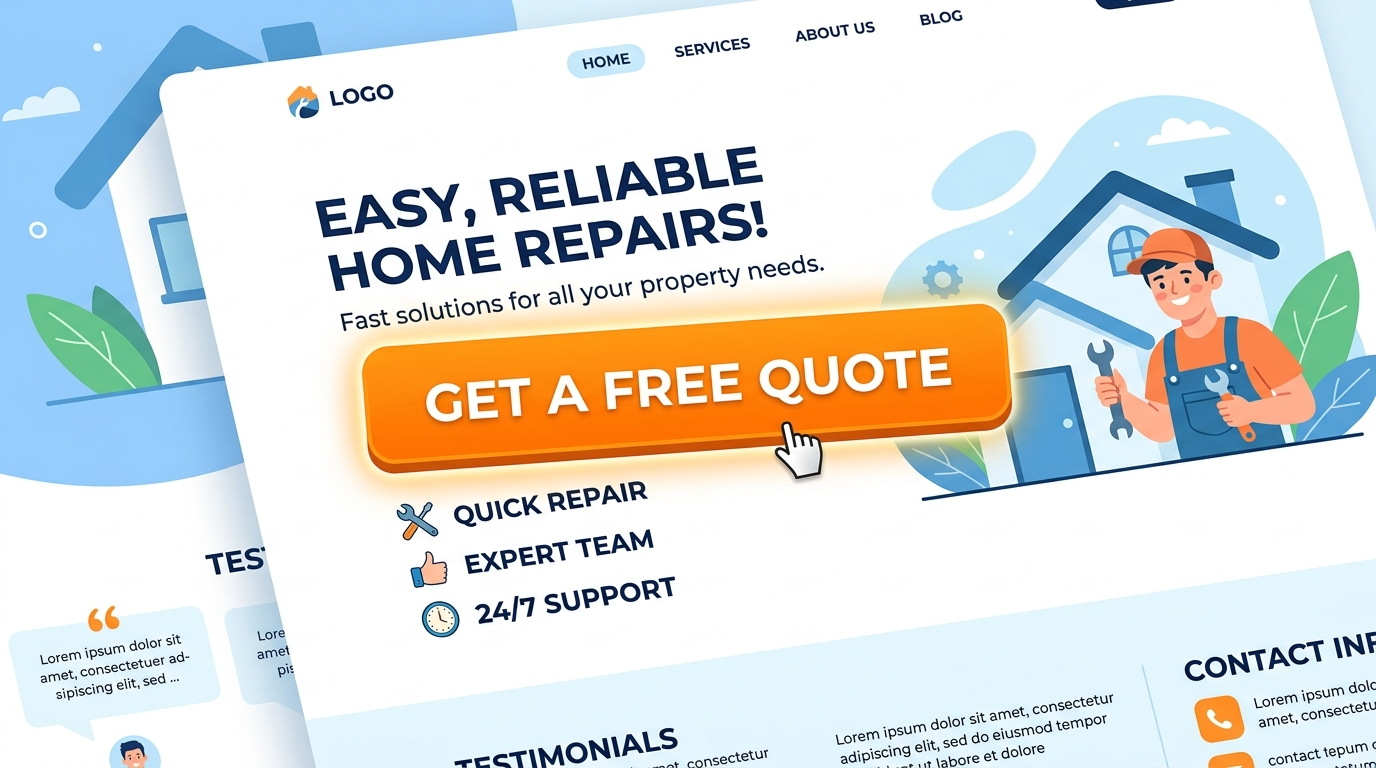
Quick Tip: Make your Calls to Action (CTAs) prominent and benefit-driven. Instead of just "Submit," try "Get a Free Quote Now" or "Book Your Consultation." Place them where visitors naturally look.
Effective websites use prominent, benefit-driven CTAs to guide customers. These are not just buttons; they are invitations to engage. They tell your visitors exactly what you want them to do and what benefit they'll gain from doing it.
Without clear CTAs, your website is like a store with no checkout counter. People can browse, but they can't complete a purchase or even ask for help.
Beyond the Brochure: Your Website as a Sales Machine
Many small businesses still treat their website like a static online brochure. They see it as a digital placeholder, a place to list services and contact information, rather than a dynamic, interactive business tool designed to generate revenue.
This "brochure mentality" is a major reason for small business website failure. These sites often lack clear business goals. There's no mapped customer journey, meaning no thought put into how a visitor moves from initial interest to becoming a paying client.
They often miss crucial lead capture elements. Where are the forms for inquiries? The email sign-ups for newsletters or special offers? The landing pages designed to convert specific traffic? Without these, your website is simply showing information, not actively gathering leads.
A strategic approach, however, turns website visits into revenue. Recent analyses from 2025-2026 highlight the impact of treating your website as a sales system. For example, a small law firm increased its leads by 300% after restructuring its content, strengthening its CTAs, and implementing basic SEO and lead-generation pages.
Your website should be an active participant in your sales process, not just a passive display. It needs to have a purpose, guide your visitors, and provide clear opportunities for them to become customers.
Your Action Plan: Simple Fixes for a Better Website
It’s time to move past the common pitfalls and turn your website into a powerful asset. Here's a practical action plan to fix your small business website and make it truly work for you.
Get Found: Basic SEO Steps
To overcome small business website failure due to invisibility, you need a solid foundation in SEO. This isn't about outspending large corporations; it's about smart, targeted effort.
- Target local and niche keywords: Focus on what your specific customers are searching for in your area or industry. Don't aim for broad, highly competitive terms. Instead, think "plumber near me" or "vegan bakery downtown." This is a core small business SEO tip.
- Create useful, informative content: Answer common questions your customers have. This builds trust and positions you as an authority. Quality content is key for search engines and users.
- Ensure your site has a healthy technical foundation: This includes making sure search engines can easily crawl your site, that your internal links work, and that you're using structured data where appropriate. These behind-the-scenes elements are crucial for visibility.
Keep Them Engaged: Speed & Mobile First
Once visitors find you, you need to keep them on your site. Speed and mobile-friendliness are non-negotiable in 2026.
- Optimize images and code: Large images and unoptimized code drastically slow down your site. Compress images, use modern file formats, and ensure your website's code is clean and efficient to drastically improve load times.
- Ensure your site looks and works perfectly on all devices: Implement responsive design so your website automatically adapts to any screen size – desktop, tablet, or smartphone. This is essential for a mobile friendly website small business needs.
Turn Clicks into Customers: Strong CTAs
Your website’s job isn't just to inform; it's to convert. Clear calls to action are vital for website conversion for small business.
- Add clear, benefit-driven buttons: Instead of vague phrases, use specific action-oriented language like "Get a Free Quote," "Book Your Service Now," or "Download Our Brochure." Make the benefit obvious.
- Place CTAs strategically: Don't hide them. Put your main CTAs above the fold, at the end of relevant sections, and in your navigation. They should be easy to see and click, forming clear calls to action website visitors can follow.
Build a System: Goals & Lead Capture
Move beyond the brochure. Make your website a proactive part of your business strategy.
- Define what you want your website to achieve: Is it more phone calls? Online sales? Newsletter sign-ups? Clear goals will dictate your website's design and content.
- Integrate forms, email sign-ups, and special offers: Provide multiple opportunities for visitors to become leads. Offer something valuable in exchange for their contact information. This is how you get more leads from website traffic.
Frequently Asked Questions
Your business website might not be working due to several common issues. These often include a lack of visibility in search engines (poor SEO), slow loading times, a non-mobile-friendly design, or the absence of clear calls to action that guide visitors towards taking the next step, like contacting you or making a purchase.
To fix your small business website, focus on improving its core functionality. This involves optimizing for search engines with targeted keywords and quality content, ensuring fast loading times and mobile responsiveness, adding clear and compelling calls to action, and integrating lead capture elements like contact forms or email sign-ups.
For a small business website, the most important things are visibility (being found on Google), a positive user experience (fast loading, mobile-friendly design), clear communication of your value proposition, and effective conversion pathways (strong CTAs and lead capture). Essentially, it needs to attract, engage, and convert visitors into customers.
Don't let your website be another statistic of small business website failure. With a strategic approach and practical fixes, it can become a powerful engine for growth. If you're ready to stop guessing and start seeing real results from your online presence, let's talk.
CodeRift Agency specializes in transforming underperforming websites into lead-generating assets. We can help you identify exactly why your business website isn't working and implement the changes needed to fix it. Book a free audit call with CodeRift today and discover how your website can start working harder for you.