What Is Microduck? The $399 Trainable Robot Explained
When preorders opened in late August 2026 at a headline-grabbing $399 introductory price point, small business owners took notice. For years, physical robotics meant spending tens of thousands of dollars on industrial arms or proprietary hospitality units. A trainable biped robot priced lower than an entry-level iPad immediately sparked questions about practical workplace utility.
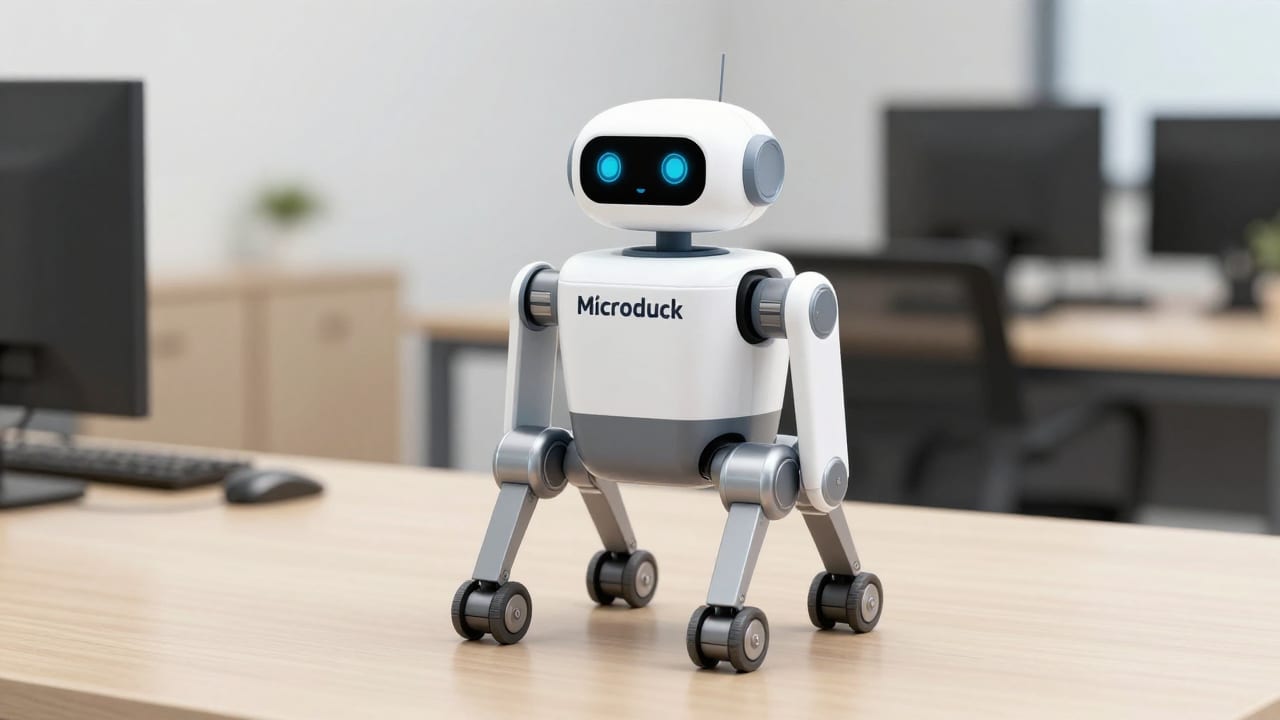
Physically, the robot stands just under ten inches tall and features a compact, two-legged design powered by low-voltage actuators. Its core physical capabilities include basic waddling, sitting down, crouching, kicking small items, standing up after taking a fall, and grasping lightweight objects with a beak-like gripper mechanism.
Microduck launched at a $399 base price (plus shipping and taxes) in August 2026, targeting initial developer batch deliveries ahead of the 2026 holiday season. It is open-source hardware powered by standard Python robotics libraries.
The platform relies on a sim-to-real training pipeline where movements are simulated digitally before being deployed to physical hardware. While it represents a massive engineering achievement for researchers, understanding its actual business utility requires separating hardware hype from daily commercial reality.
Can a $399 Trainable Robot Run Your Front Desk Today?
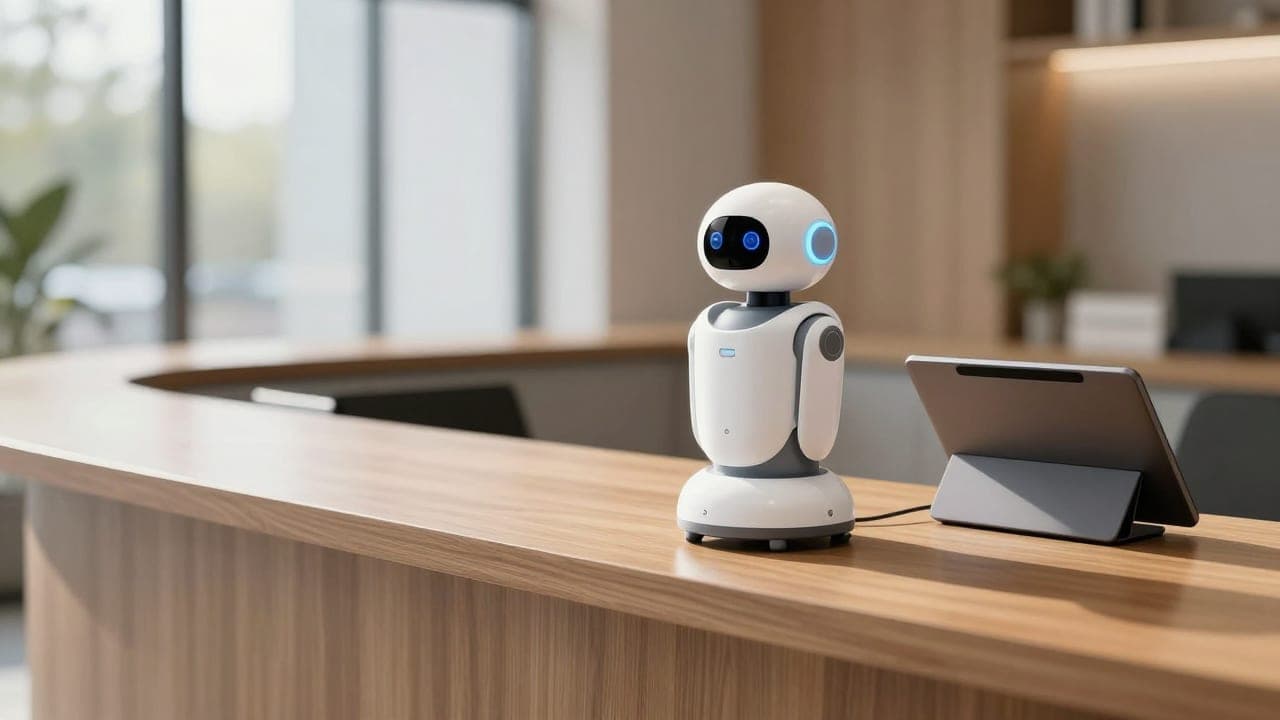
The short answer is no. Despite viral social media clips showing the robot balancing and fetching lightweight props, Microduck is not built to handle commercial small business front desk automation.
There is a massive divide between developer experimentation platforms and commercial production environments. Hugging Face and Pollen Robotics explicitly engineered this device for machine learning researchers, university classrooms, and hobbyist coders. It is an open sandbox for neural network experiments, not a turnkey digital receptionist.
Local service businesses—such as medical practices, auto repair shops, law firms, and wellness clinics—require front-office systems that solve operational bottlenecks. A front desk coordinator must answer phone inquiries, parse insurance information, collect customer signatures, process credit cards, and manage calendar conflicts in real time.
- No native conversational interfaces: The robot does not ship with out-of-the-box acoustic speaker arrays, natural language voice pipelines, or contextual business knowledge.
- Zero software integration: It cannot connect natively to your CRM, practice management system, QuickBooks account, or scheduling calendar without custom software engineering.
- Physical limitations: With a 25cm stature and a simple pinch gripper, the unit cannot handle clipboards, hand out physical room keys, or manage client paperwork.
Buying experimental AI hardware expecting an out-of-the-box employee replacement will lead to wasted capital. Devices like the Microduck robot require dedicated software developers to program every single movement and interaction from scratch.
Training this robot requires setting up physics environments in tools like MuJoCo, configuring reinforcement learning algorithms like PPO (Proximal Policy Optimization), and exporting weights through ONNX pipelines. For a busy business owner trying to eliminate administrative friction, managing deep learning physics simulations creates more overhead than it eliminates.
What Low-Cost Robotics for Small Business Signals for the Future
While Microduck cannot manage your reception desk this year, the underlying technology signals a major transition in physical automation. The advent of affordable service robots proves that the bill of materials for articulated robotic hardware is falling drastically.
Historically, high actuator costs, custom gearbox machining, and expensive sensors kept physical robots locked inside enterprise research labs. As open-source communities commoditize motor controllers, lightweight frames, and vision chips, the hardware barrier to entry will continue to collapse throughout the late 2020s.
We are watching the hardware industry mirror the early days of personal computing. In the late 1970s, hobbyist kits like the Altair 8800 required enthusiasts to toggle front-panel switches just to compute simple math. Within a decade, those primitive kits evolved into office computers running spreadsheets and word processors.
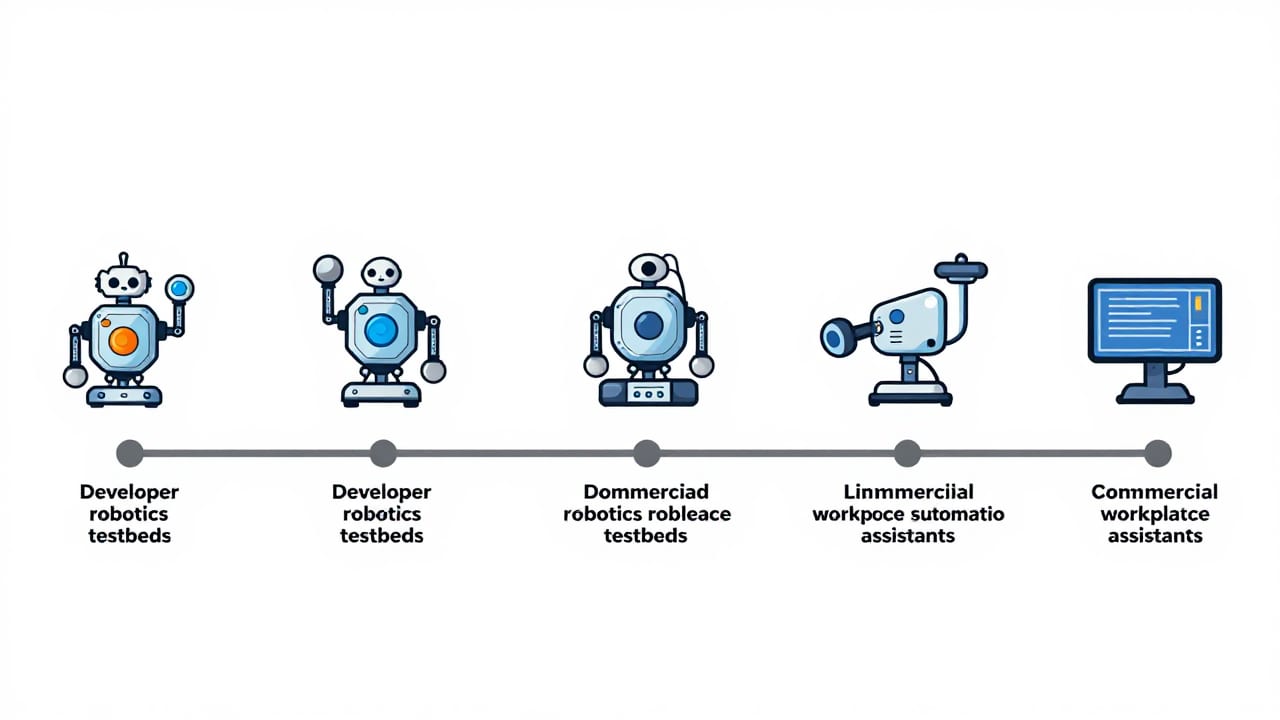
Physical task automation lags behind digital software automation because the real world is messy, unpredictable, and litigious. A software scheduling glitch causes a minor calendar delay, whereas a physical robot knocking over a cup of hot coffee creates an immediate liability. Over the next five to ten years, sub-$500 platforms will mature into specialized commercial appliances designed for specific physical chores.
Smarter Ways to Automate Repetitive Front-Office Tasks Right Now
If physical hardware is not ready for your reception area, where should you invest your automation budget? The highest return on investment comes from automating digital workflows that currently consume your staff's working hours.
Nearly 90% of front-office administrative drag involves information routing rather than physical movement. Answering inbound phone calls, answering repetitive FAQs, booking appointments, and chasing unpaid invoices do not require a mechanical arm. They require intelligent software integrations.
Deploying conversational AI voice agents allows local service companies to capture inbound leads 24/7 without placing callers on hold. These agents integrate directly into your calendar backend, verify caller credentials, and update your client records instantly.
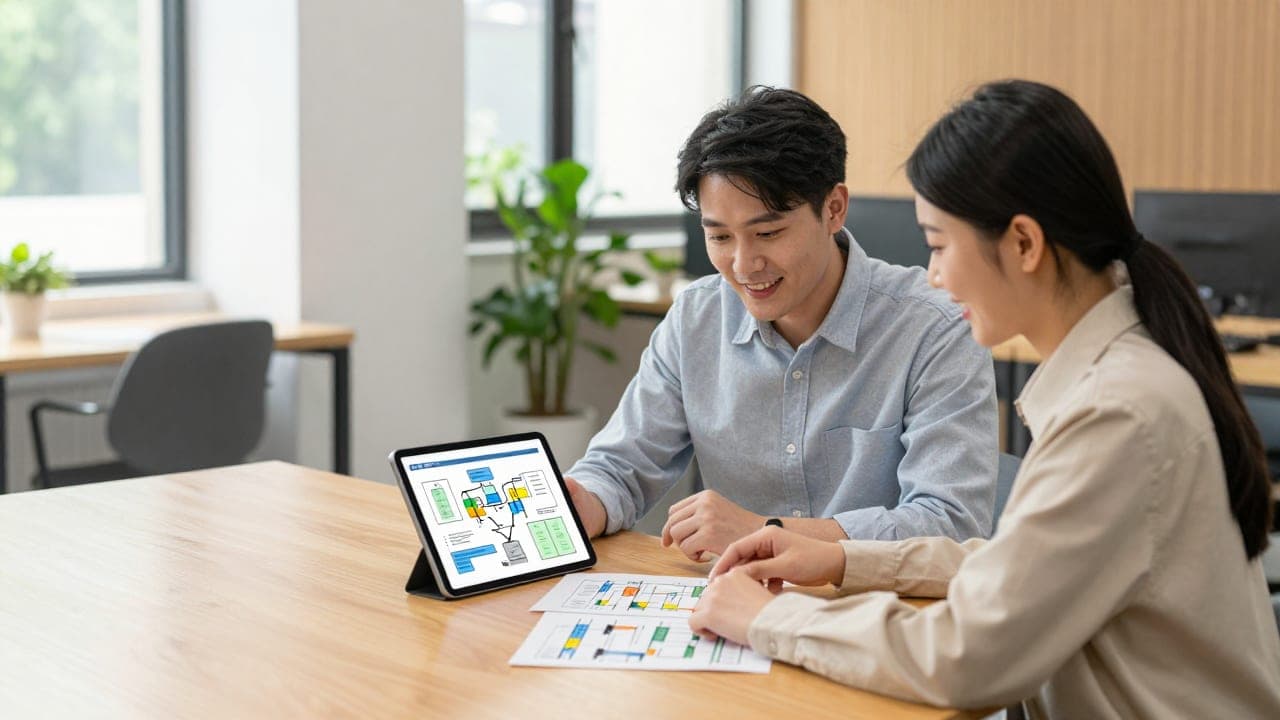
Replace physical front-desk paperwork with a $200 commercial tablet kiosk running dynamic intake forms. You eliminate handwriting errors, protect client privacy, and sync data straight to your CRM without hiring a programmer.
To evaluate where your automation dollars deliver the fastest payback, consider how experimental hardware compares against modern software automation systems.
| Operational Factor | Experimental AI Hardware (e.g., Microduck) | Turnkey Digital Front-Office AI |
|---|
| Primary Purpose | Reinforcement learning and physics research | Customer intake, scheduling, and phone answering |
| Setup Time | Weeks to months of custom code development | 24 to 72 hours for complete system deployment |
| Maintenance Requirements | Hardware repairs, motor calibration, and battery charging | Cloud-managed software updates with zero physical wear |
| System Integration | Manual API development required for CRMs | Native two-way sync with calendars, CRMs, and billing tools |
| Direct Business ROI | Negative for non-technical service operations | Immediate reduction in missed calls and administrative labor |
Investing in front-office automation software eliminates manual data entry, cuts down on human error, and speeds up your response times. Instead of waiting for physical robotics to mature, you can automate your entire customer intake journey today using existing, battle-tested tools.
Key Takeaways: Low-Cost Robotics vs. Practical Business AI
- Microduck is an open-source research platform: It is designed for developers, machine learning engineers, and educators to experiment with reinforcement learning, not as a commercial front-desk worker.
- Hardware costs are falling rapidly: The $399 price tag represents a milestone for trainable robots and hobbyist hardware, signaling cheaper commercial devices later this decade.
- Physical robots are mismatched with front-office needs: Routine administrative tasks require natural language comprehension, software integration, and data processing rather than mechanical legs.
- Software automation delivers immediate ROI: Voice agents, SMS automations, and digital intake kiosks solve daily operational friction at a fraction of the cost and complexity of physical hardware.
- Adopt a digital-first automation strategy: Focus your immediate capital on fixing broken digital pipelines before experimenting with unproven physical AI hardware for small business.
How CodeRift Helps Local Businesses Deploy Practical AI Automation
At CodeRift, we have audited dozens of local service operations to uncover the hidden bottlenecks draining staff productivity. We consistently find that front-desk teams lose up to 15 hours every week handling basic phone inquiries, confirming appointments, and retyping handwritten intake forms.
You do not need experimental robotics to eliminate administrative chaos. Our team builds custom, turnkey software workflows tailored to your specific business operations. We connect intelligent conversational voice agents, digital onboarding portals, and automated booking systems straight into your existing software stack.
Explore our transparent pricing plans to see how accessible custom automation can be, or review our full suite of digital services to discover what we build. You can also read more deep dives on our blog to stay updated on practical artificial intelligence trends.
If you are ready to modernize your operations, reduce overhead, and deliver a frictionless experience to your clients, we are here to help. Reach out through our contact page or schedule a discovery session directly through our calendar.
Can the Microduck Robot Replace a Front-Desk Receptionist?
No, the Microduck robot cannot replace a front-desk receptionist. It is an open-source research testbed measuring only 25 centimeters tall, built specifically for robotics developers to practice training movement models. It lacks the voice interfaces, CRM integrations, document processing capabilities, and physical scale required to interact with clients or perform front-office business tasks.
How Much Does Practical Front-Office Automation Cost for Small Businesses?
Implementing practical software automation typically costs between $150 and $800 per month, depending on the complexity of your workflow and the volume of incoming calls or client records. Setting up digital intake tablets, automated SMS appointment reminders, and conversational AI phone agents requires minimal upfront capital and yields immediate labor savings compared to hiring additional administrative staff.
When Will Affordable Service Robots Be Ready for Local Businesses?
Commercial-ready physical service robots designed for small business environments are expected to mature between 2028 and 2032. While research platforms like Microduck have brought hardware manufacturing costs down below $500, creating durable, liability-free physical robots that can navigate public spaces, manipulate everyday office items, and run without technical supervision requires several more years of engineering refinement.
Stop losing valuable staff hours to repetitive manual administrative tasks. Take the first step toward streamlining your business operations by visiting our booking page today to schedule your free front-office automation audit with the CodeRift team.