What Is AI Quote and Proposal Automation for Small Agencies?
For most boutique marketing firms, development shops, and design studios, sales admin is a bottleneck. Sales reps and founders often waste hours copying project requirements into static templates. With modern agency proposal automation, the CRM does the heavy lifting directly from your incoming leads.
Behind the scenes, natural language models parse raw customer messages, discovery call transcripts, or intake questionnaires. The AI extracts project deliverables, maps them to your agency's standard rate card, and drafts a structured proposal ready for a quick final review.
Your team does not need technical coding skills or complex prompt engineering to make this work. Modern workflow tools connect directly to your existing customer relationship management platform through standard webhooks and low-code integrations.
In 2026, over 65% of fast-growing service agencies rely on embedded small business CRM AI tools to generate initial project drafts before their competitors even finish reviewing the lead.
The difference between an old-school static template and an intelligent dynamic proposal is substantial. A static template forces you to manually find and replace placeholder text, which frequently leads to embarrassing copy-paste errors.
Dynamic AI proposals, by contrast, pull context from your past successful projects, adjust scope language based on the client's industry, and calculate tiered pricing automatically.
| Feature |
Traditional Proposal Templates |
Dynamic AI Proposal Automation |
| Creation Time |
2 to 5 hours per proposal |
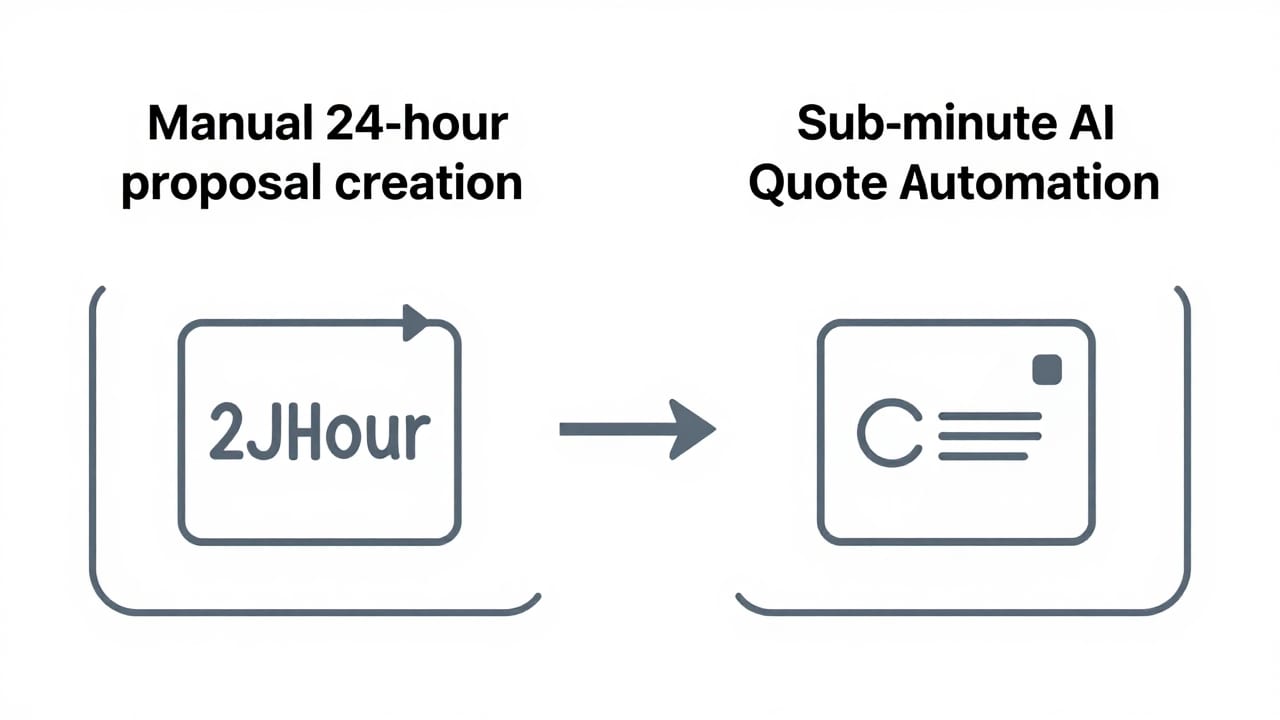
Under 30 seconds per draft |
| Scope Personalization |
Manual find-and-replace text |
Context-aware scope tailored to client goals |
| Pricing Accuracy |
Prone to spreadsheet and math errors |
Programmatic calculations based on real rate cards |
| Pipeline Integration |
Isolated PDFs stored in local folders |
Direct sync with CRM stages and deal values |
| Client Turnaround |
24 to 48 hours after discovery call |
Sent while the discovery call is still top of mind |
Why Does Manual Quoting Hold Small Agencies Back?
The biggest hidden revenue killer for growing service firms is the 24-hour proposal delay. When an interested prospect reaches out, their buying intent is at its absolute peak during the first few hours.
Every hour you spend building a quote from scratch gives your prospect time to research competitors or lose momentum. Agencies that deliver comprehensive quotes within minutes close deals at more than double the rate of slow responders.
Beyond speed, manual quoting creates dangerous financial leaks inside your agency. When sales reps guess pricing under pressure or use outdated spreadsheets, they consistently underestimate complex project deliverables.
This leads directly to scope creep and squeezed profit margins before project work even begins. Manual data entry also increases the risk of sending incorrect terms, mismatched discount rates, or broken formulas to high-value prospects.
Agency owners spend up to 30% of their billable weekly hours writing proposals, adjusting spreadsheets, and chasing approvals instead of closing deals or delivering client strategy.
When leadership spends a third of the week on clerical sales tasks, organic agency growth grinds to a halt. You hit a revenue ceiling simply because you lack the administrative bandwidth to bid on more work.
Using an AI proposal generator for small agency workflows eliminates this administrative drag. It protects your agency's margins by enforcing strict pricing rules across every estimate your team creates.
Recent breakthroughs in lightweight, high-speed language models have changed the economics of sales automation. Released in August 2026, models like GLM-5.3-Flash, Qwen3.8-Flash-Next, and DeepSeek V4 Pro make intelligent sales operations instantaneous and incredibly affordable.
Older AI models were often too slow or too expensive to run automatically on every incoming contact form or phone transcript. Today's lightning-fast models process multi-page requirements documents and complex rate matrices in under ten seconds.
Because these next-generation models cost fractions of a cent per execution, small agencies can run automated reasoning routines across their entire sales pipeline without watching software costs balloon.
Pairing high-speed flash models with your CRM lets you automatically extract action items, budget ranges, and required technologies directly from audio recordings of discovery calls.
These advanced models do far more than just summarize text. They act as smart analytical engines that match client requirements against your historical win data.
- Ultra-fast processing: Convert unstructured intake notes, audio transcripts, and brief emails into professional, itemized scope documents in seconds.
- Affordable intelligence: Generate hundreds of personalized, multi-tier pricing proposals for mere pennies in total API compute costs.
- Error-proof scope matching: Align new client requests with previously profitable project scopes to ensure healthy margins on every deal.
- Contextual objection handling: Automatically insert relevant case studies and testimonials based on the specific industry mentioned by the prospect.
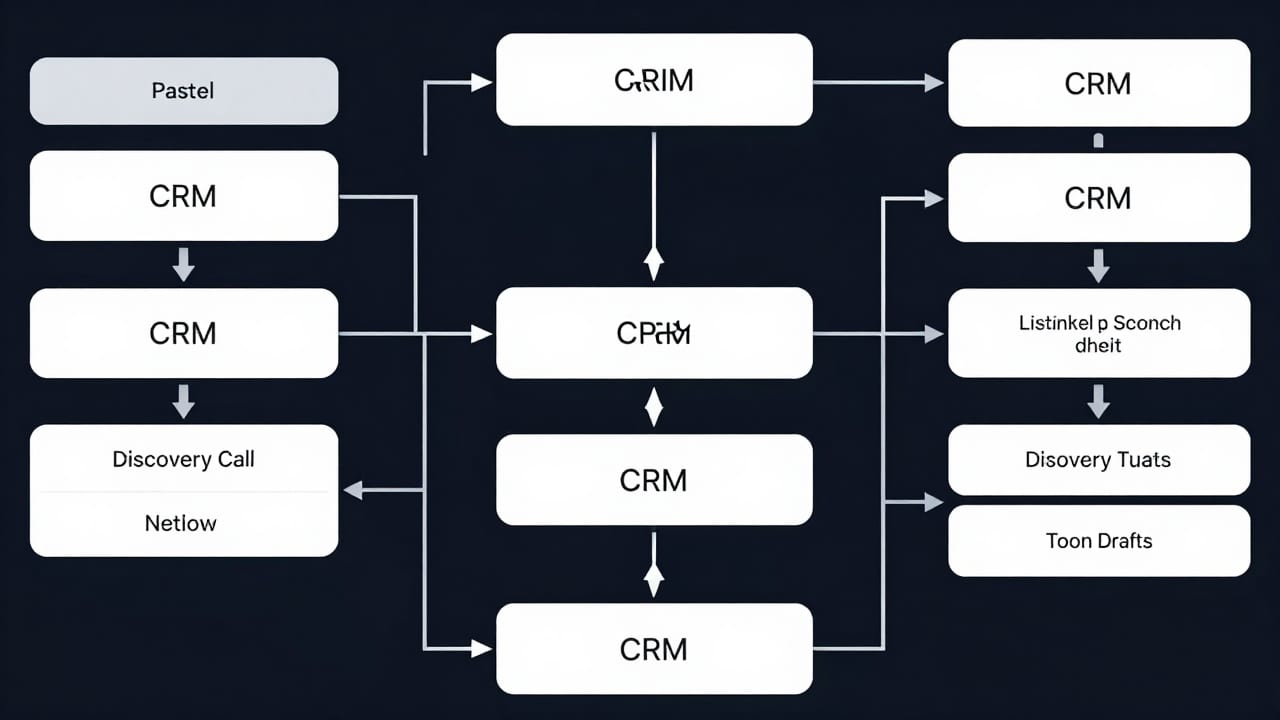
By delegating data extraction and document assembly to high-speed AI models, your sales reps can focus 100% of their energy on relationship building and consultative closing.
This shift turns a slow, manual admin routine into a high-velocity smart CRM sales automation engine that runs continuously in the background.
What Are the 4 Steps to Implement Smart CRM Sales Automation?
Transitioning to automated quoting for agencies does not require overhauling your entire technology stack. You can build a reliable, high-converting quoting system in four straightforward stages.
At CodeRift, we have audited dozens of agency pipelines and found that the simplest operational workflows consistently generate the highest return on investment.
Step 1: Standardize Your Core Service Packages and Rate Cards
AI cannot automate pricing logic that does not exist. Start by documenting your agency's standard services, hourly rates, add-on modules, and tiered deliverables in clear, plain-language reference files.
Define clear scope boundaries for each package so the AI understands what is included by default and what triggers an additional line item fee. Keep this data organized in a central, easily accessible database or CRM product catalog.
Next, ensure every lead intake point feeds directly into your CRM deal stages. This includes website contact forms, interactive project planners, discovery call scheduling forms, and inbound email aliases.
When a lead arrives, an automated workflow triggers a webhook that passes the lead's raw message and company details directly to your AI processing layer. This eliminates manual copy-pasting across disparate tools.
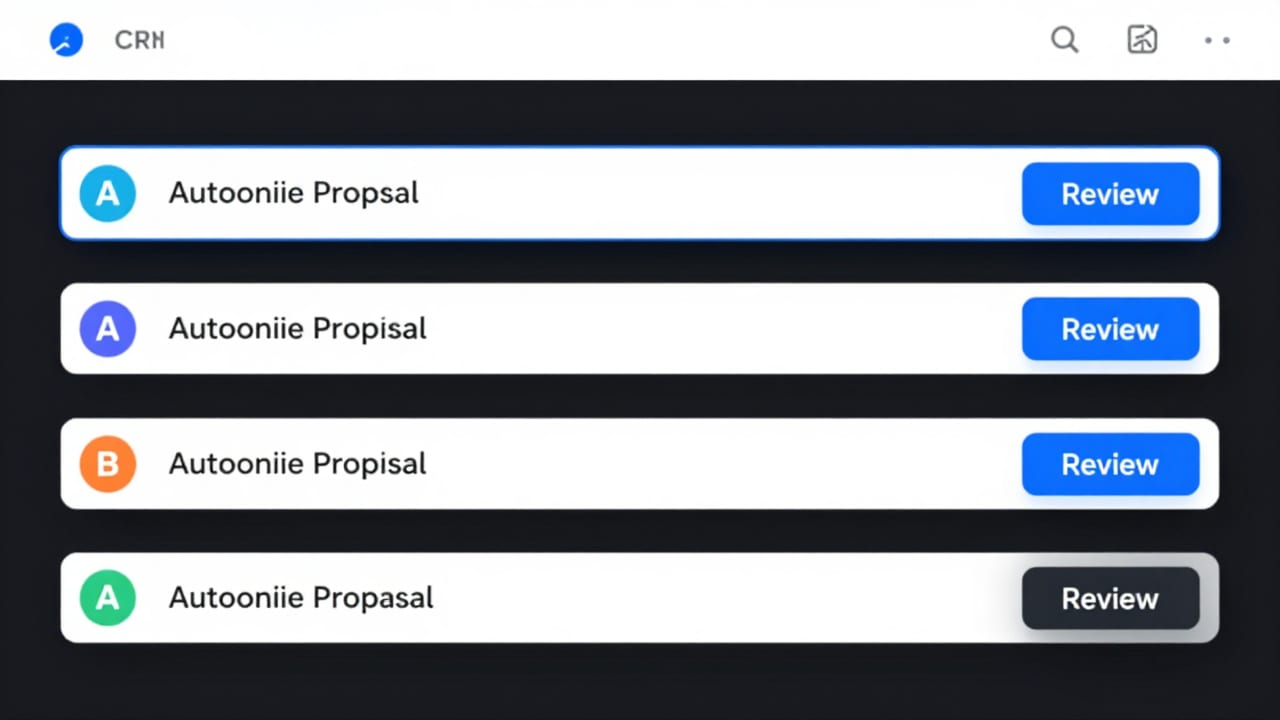
Step 3: Deploy an Automated Draft Generator with One-Click Human Review
Configure your workflow to run incoming project data against your standard rate card using a modern flash model. The AI drafts a comprehensive proposal, complete with scope details, milestone schedules, and tiered pricing.
Instead of sending the document to the client automatically, the system notifies the account executive with a draft preview link inside the CRM. The rep can review the numbers, tweak custom phrasing in thirty seconds, and approve the send with a single click.
Always maintain a human-in-the-loop review step for custom proposals over $5,000 to ensure client nuances and edge cases are handled perfectly.
Step 4: Enable Instant E-Signatures and Integrated Payment Links
Once approved, the proposal is delivered to the prospect via an interactive web link rather than a clunky PDF attachment. The digital proposal includes embedded e-signatures and instant deposit payment options.
When the client signs and pays, the CRM automatically marks the deal as closed-won, generates the onboarding project in your project management software, and alerts your delivery team.
Key Takeaways: Upgrading to a Modern Revenue Engine
- Speed wins deals: Responding to client inquiries with accurate, customized proposals within minutes dramatically increases your closing rate.
- Zero custom coding required: 2026 AI models integrate directly with popular CRM platforms through standard low-code automation tools.
- Human oversight ensures quality: AI handles data entry and scope drafting, while your team provides the critical final review and personal touch.
- Margins stay protected: Automated quoting matches real rate cards and past profitable projects, eliminating spreadsheet errors and unbilled scope.
- Reclaim your billable hours: Founders and sales leaders eliminate up to 30% of their administrative workload, unlocking time for business development.
Frequently Asked Questions About AI Quote Automation
How accurate is AI proposal generation for custom scope work?
Modern 2026 AI models are extremely accurate when provided with structured rate cards and clear project parameters. Because the models pull pricing from predefined rules rather than guessing, mathematical calculations remain exact. Retaining a fast human-in-the-loop review ensures that creative or unusual client requests are vetted before the proposal reaches the prospect.
Do I need to switch CRMs to use automated quoting for agencies?
No, you rarely need to switch your existing CRM platform. Most modern platforms—such as HubSpot, Salesforce, Pipedrive, and GoHighLevel—support standard API connections and webhooks. You can easily integrate an external AI processing workflow that pushes generated drafts directly into the CRM your team already uses daily.
How long does it take to set up smart CRM sales automation?
A basic quote automation setup can be configured and tested in less than a week if your agency already has standardized pricing packages. Complex implementations involving custom discovery call transcription, multi-tiered approvals, and custom ERP integrations typically take two to three weeks to fully deploy and test.
How CodeRift Helps Small Agencies Automate Sales
At CodeRift, we have audited more than 100 small business workflows, helping service firms eliminate repetitive manual admin and build predictable growth systems. We know that agency owners want higher win rates, not more complicated software setups.
Our team builds tailored sales automation systems that connect your existing intake channels to intelligent, cost-effective quoting workflows. We standardize your service offerings, connect your CRM, and implement guardrails that guarantee accurate, professional client proposals every time.
Explore our full range of automated development services, check out our transparent pricing models, or read our latest automation teardowns on our blog. If you have specific workflow questions, feel free to reach out directly through our contact page.
Ready to turn your plain CRM into a dependable revenue engine? Book a free discovery call with CodeRift today, and let us show you a live proposal automation demo built specifically for your agency.