What Does Losing Leads Actually Mean?
At CodeRift, we've audited 100+ small business websites and their backend sales processes. We see the exact same pattern almost every time we look under the hood.
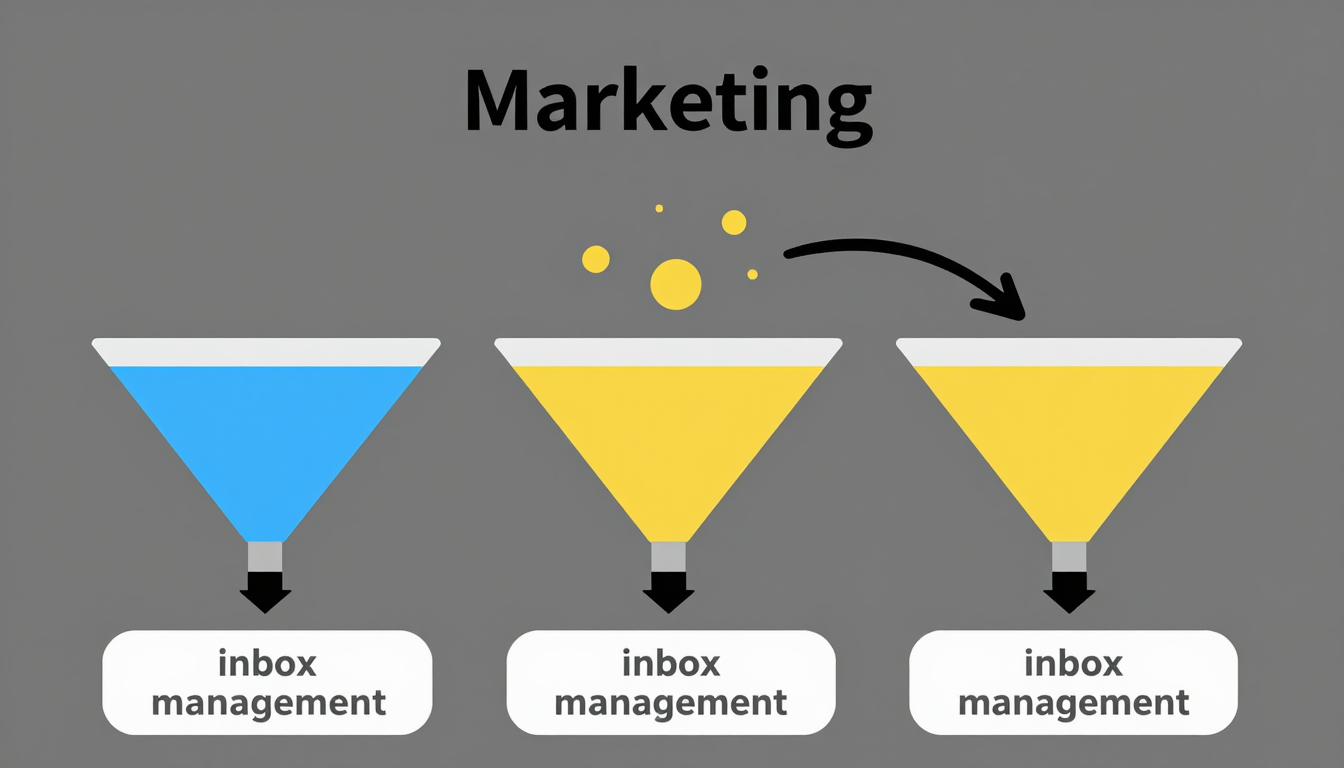
Business owners assume their marketing campaigns are broken because sales are down. In reality, their marketing is working fine, but the leads are dying a slow death in an unmanaged company inbox.
Losing a lead rarely means accidentally hitting the delete button on a promising email. Instead, it happens when a high-intent message gets buried under a mountain of newsletters and spam.
By the time your team finally spots the inquiry and responds, the prospect has already moved on to a competitor. You haven't just lost a sale; you've wasted the marketing dollars it took to get that prospect to email you in the first place.
What Is the Staggering Financial Cost of a Missed Lead?
You pay for every single email that lands in your sales inbox. The true cost of losing leads starts with your customer acquisition cost (CAC).
As of 2026, the cross-industry median cost to acquire a lead is $66.69. However, for B2B services and SaaS companies, that blended cost per lead (CPL) routinely jumps to $237 or more.
If you are in higher education or specialized consulting, you might be paying upwards of $982 just to get someone to fill out a contact form. When that email goes unanswered, you lose that money before any actual sales work even begins.
Common pitfall to avoid: Don't treat your inbox like a free resource. Every ignored inquiry is a direct deduction from your marketing ROI.
The losses compound rapidly for small teams. Small businesses with fewer than 10 employees can lose between $2,000 and $15,000 per month in missed revenue.
This lost revenue from ignored emails happens entirely due to slow or inconsistent response times. Prospects in 2026 expect near-instant communication, and if you make them wait 24 hours, they are already gone.
Consider the value of a single missed appointment hidden in your inbox. Depending on your business model, that one overlooked email can cost you anywhere from $500 to $5,000 in lost lifetime revenue.
How Does Email Overload Drain Your Team's Time?
We often think of a messy inbox as just an annoyance, but it is actually a massive operational expense. The average professional now receives over 121 business emails per day.
When your staff has to manually sift through those messages to find paying customers, they are wasting highly valuable hours. In fact, poor email management costs businesses roughly $21,000 per employee annually in lost productivity.
For highly paid knowledge workers, some 2026 estimates put that wasted time closer to $48,000 a year. You are literally paying your team to act as human spam filters.
Good small business inbox management requires moving away from manual sorting. Let's look at how the old way compares to a modern, automated approach.
| Feature |
Manual Inbox Management |
Smart AI Inbox Management |
| Sorting Speed |
Slow. Staff read every subject line. |
Instant. AI floats leads to the top. |
| Response Time |
Hours or days, depending on workload. |
Immediate automated follow-ups. |
| Labor Cost |
High ($21k+ per employee wasted). |
Low (Software does the heavy lifting). |
| Lost Leads |
High risk of human error and fatigue. |
Virtually zero missed inquiries. |
When you implement smart tools, real inquiries float to the top automatically. You stop paying your team to dig for gold and start paying them to actually close deals.

What Are the Hidden Taxes of Database Decay and Deliverability?
Many business owners mistakenly believe that a bad lead only wastes their marketing budget. The reality is that the cost of poor follow up creates a ripple effect across your entire company.
First, there is the hidden tax of database decay. Customer databases decay by an average of 22% every single year.
If you leave a lead sitting in your inbox for too long, their contact information changes or their buying interest goes completely stale. You might have captured a great lead, but your slow process turned it into a dead end.
Important context: Bad inbox habits force your sales team to chase cold prospects, which distorts your actual sales pipeline and lowers team morale.
Second, ignoring your inbox actively damages your sender reputation with major email providers. In 2026, email deliverability algorithms are incredibly strict regarding engagement.
Roughly 1 in 6 marketing emails never reaches the inbox because of poor deliverability. If you aren't managing your incoming mail and responding promptly, providers start treating your domain like spam.
This means your future marketing campaigns won't even reach your prospects. A messy inbox today literally prevents you from making sales tomorrow.
An Example of the Missed Lead Cost in Action
Let’s look at a practical example. Imagine you run a B2B consulting firm, and you spend $2,000 on LinkedIn ads to drive traffic to your services page.
You generate 10 solid inquiries. Your CPL is $200, which is perfectly healthy for your industry.
However, your sales inbox is flooded with software subscriptions, internal memos, and cold pitches. Three of those high-intent leads get pushed to the second page of your inbox by lunchtime.
By the time your sales rep finds them two days later, those three prospects have already booked calls with your competitor. You just lost $600 in upfront ad spend, plus the potential $15,000 in lifetime value those clients represented.
Key Takeaways
- Leads are sunk costs: Every missed email lead wastes the upfront money you already spent to acquire them.
- Revenue bleeds quickly: Slow response times and buried emails cost small businesses thousands of dollars in lost revenue every single month.
- Productivity plummets: Employee time spent manually digging through crowded inboxes is a massive, hidden operational cost that drains profitability.
- Future sales suffer: Ignoring email lead management actively hurts your ability to reach future customers due to database decay and strict 2026 deliverability rules.
Frequently Asked Questions
How much revenue is lost from ignored emails?
Small businesses typically lose between $2,000 and $15,000 per month due to ignored or delayed emails. A single missed appointment can cost a company $500 to $5,000 depending on their average ticket size and industry.
What is email lead management?
Email lead management is the systematic process of capturing, categorizing, and responding to sales inquiries that land in your inbox. It involves using automation and AI tools to ensure high-intent buyers are prioritized and contacted immediately.
Why is small business inbox management so critical?
It is critical because poor management leads directly to lost sales, wasted marketing budgets, and severe productivity drains. Effective inbox management stops leads from falling through the cracks and protects your domain's email deliverability reputation.
How to Stop Losing Leads and Start Closing Deals
You cannot afford to let your inbox dictate your revenue. To fix this, you need to remove the human bottleneck from the initial sorting process.
Start by implementing simple, user-friendly AI tools to automatically categorize and prioritize incoming sales inquiries. This ensures your sales team sees the buyers first, without having to dig through promotional clutter.
Quick tip: Set up automated, personalized immediate responses. This ensures your prospects never feel ignored while they wait for a human reply, buying your team valuable time.
Stop letting your hard-earned marketing dollars go to waste. If you are ready to fix your leaky sales funnel, we can help you implement the right systems.
Read more about our strategies on our blog, or check out our pricing to see how affordable automation can be. Don't let another lead slip away.
Contact CodeRift Agency today or book a free audit call to learn how we help small businesses easily adopt AI, organize their inboxes, and stop losing money.