What Is a Zero-Markup Model Gateway?
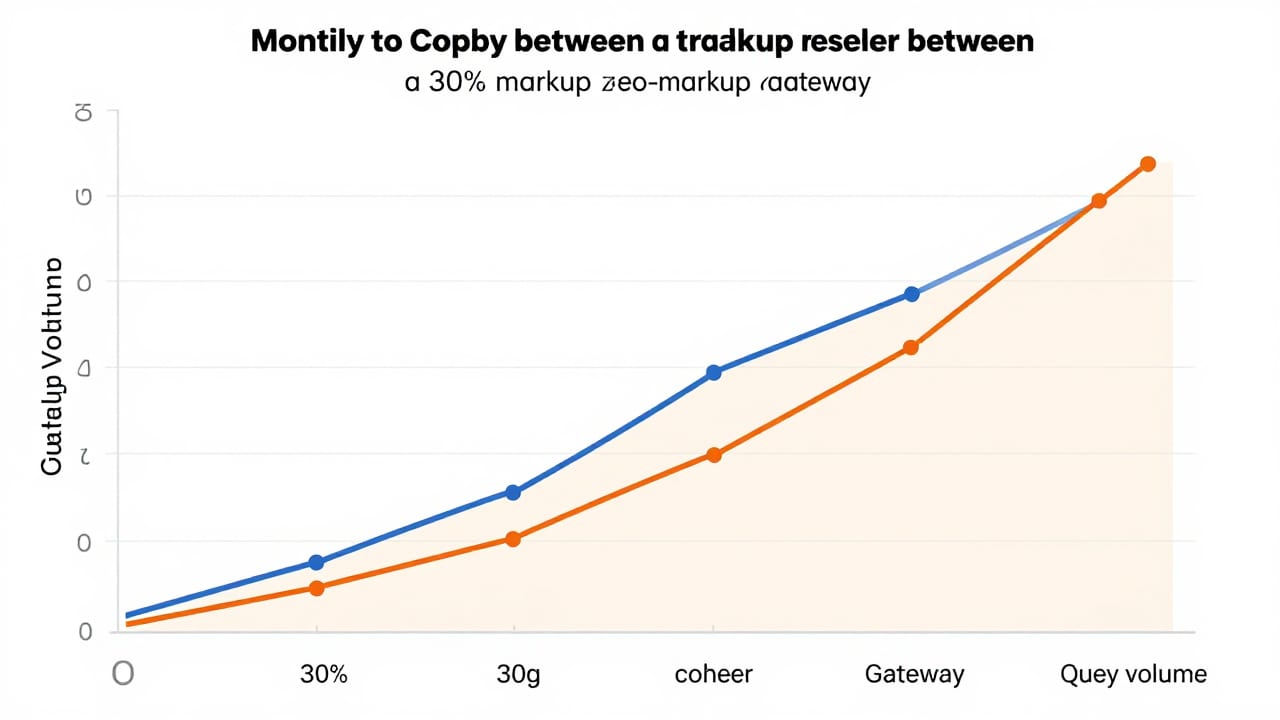
Building automated systems for small businesses in 2026 has never been easier, but running them affordably is an entirely different battle. Traditional AI wrappers and third-party aggregators quietly tack on a 15% to 50% premium to standard token costs. These hidden markups quickly turn a cost-effective client automation into a balance sheet liability.
For growing agencies and budget-conscious founders, transparent routing is no longer optional. When you remove middleman tolls, you can deliver sophisticated AI assistants, content pipelines, and customer support engines while keeping your service margins healthy and predictable.
Industry data shows that up to 40% of small business cloud AI spend in 2026 goes toward middleware markups and unused token capacity rather than actual compute processing.
Why Are Hidden AI Infrastructure Costs Crushing Small Business Budgets?
Every automated email response, lead qualification chatbot, and internal document search consumes model tokens. When your client's customer volume spikes, those token bills skyrocket without warning.
Most small business owners do not realize that their underlying software providers rarely charge pure infrastructure rates. Third-party platforms frequently mask heavy surcharges inside all-in-one software packages. When you rely on proprietary platforms that lock you into their ecosystem, you absorb their markups along with their rigid feature sets.
These compounded fees create serious operational roadblocks:
- Unpredictable monthly retainer erosion that forces digital marketing and development agencies to eat unexpected overage fees.
- Premature project cancellations when small business clients discover their monthly AI software bills have doubled without an increase in perceived value.
- Vendor lock-in traps that make it technically difficult and expensive to switch away from overpriced middleware.
- Feature stagnation because agencies cannot quickly swap outdated models for faster, cheaper alternatives without rebuilding client systems from scratch.
When unexpected cost spikes hit, small business owners often react by disabling valuable automations. This breaks the workflows your agency worked hard to implement and damages long-term client retention.
Beware of software platforms offering "free credits" up front. Many offset those credits later by charging up to double the market rate for raw token consumption once your automations go live.
How Does the Experiential Labs Model Gateway Eliminate Reseller Markups?
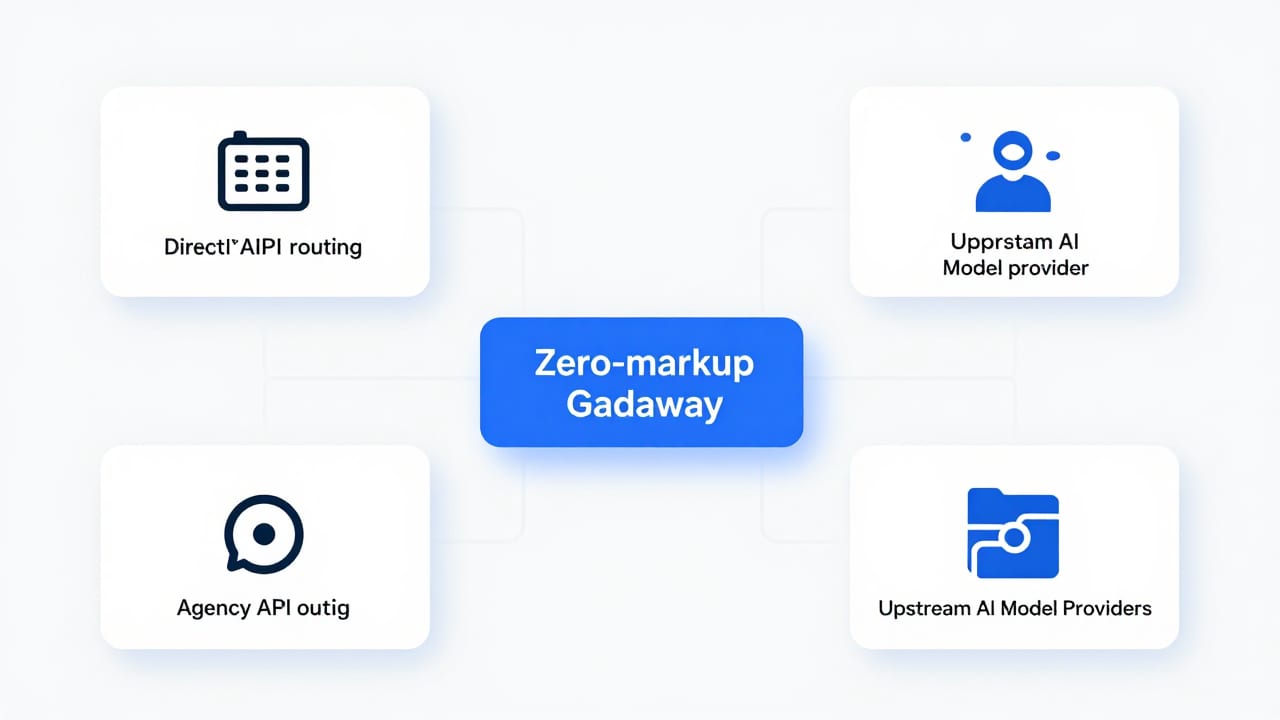
The Experiential Labs model gateway takes a fundamentally different approach to AI API cost management. Instead of skimming a percentage off every input and output token that passes through its pipes, the platform provides direct-to-provider routing with zero per-token markup.
Agencies and small businesses pay the true cost charged by OpenAI, Anthropic, Google, and open-source hosting providers. This transparent architecture decouples the gateway software utility from your usage volume, ensuring your unit economics remain steady as your business scales.
Beyond raw price savings, this setup gives development teams unified API access. You can point your application to a single endpoint and route prompts dynamically to whatever model best fits the job without managing dozen different vendor contracts.
| Feature / Metric | Traditional AI Resellers & Wrappers | Experiential Labs Zero-Markup Gateway |
|---|
| Token Pricing | Upstream cost + 15% to 50% per-token fee | 100% raw wholesale provider cost |
| Model Switching | Requires code rewrites or custom adapters | Instant switching across top-tier models via one API |
| Billing Transparency | Blended, opaque monthly invoices | Itemized usage mapped directly to provider rates |
| Usage Scaling Risk | Costs compound rapidly as client volume grows | Predictable flat-access or transparent pass-through rates |
| Vendor Independence | High vendor lock-in to proprietary interfaces | Direct access to foundational models with zero platform lock-in |
By shifting to an infrastructure layer that does not penalize usage growth, digital agencies can finally build scalable, high-margin products. To understand how custom integrations fit into your overall tech stack, browse our deep dive on modern automation in the CodeRift blog.
What Strategies Can Agencies Use to Keep AI Projects Profitable in 2026?
Cutting out vendor tolls is only half the equation. To deliver truly affordable AI for small business clients while protecting agency profits, you must implement smarter architecture and billing structures.
At CodeRift, we have audited dozens of production applications and reduced client cloud bills by over 45% using straightforward engineering best practices. Here are three practical ways to safeguard your project margins.
1. Implement Intelligent Tiered Model Routing
Not every customer inquiry requires a trillion-parameter reasoning model. Sending simple data-formatting tasks or basic FAQ requests to expensive flagship models burns through project budgets within days.
Set up your routing logic to send lightweight queries to faster, highly efficient compact models. Reserve premier flagship models strictly for complex analysis, deep code generation, or nuanced legal and medical comprehension.
2. Package Fixed-Fee Client Retainers with Built-In Buffers
Small business owners hate unpredictable bills. Instead of billing clients variable hourly and token fees, offer bundled monthly packages with predictable caps.
Because zero-markup routing keeps your base costs stable, you can calculate the exact cost per thousand queries, add your agency service margin, and pitch a risk-free monthly maintenance package. Review our structured approach to technology investments on our CodeRift pricing page.
3. Enforce Hard Spending Thresholds and Automated Alerts
Runaway loops and traffic surges can rack up thousands of dollars in a weekend if your API endpoints are left unguarded. Never deploy a live application without strict safety rails.
- Daily soft alerts notify your technical team whenever a client reaches 75% of their estimated daily query volume.
- Hard billing caps automatically switch active bots to cached responses or basic fallback scripts before triggering overage fees.
- Rate limiting per user stops malicious visitors or web scrapers from draining your client's token reserves.
Use local prompt caching where possible. Storing frequent system prompt prefixes can slash your monthly input token consumption by up to 80% on repetitive conversational workflows.
How Do You Transition Your Small Business to a Zero-Markup AI Gateway?
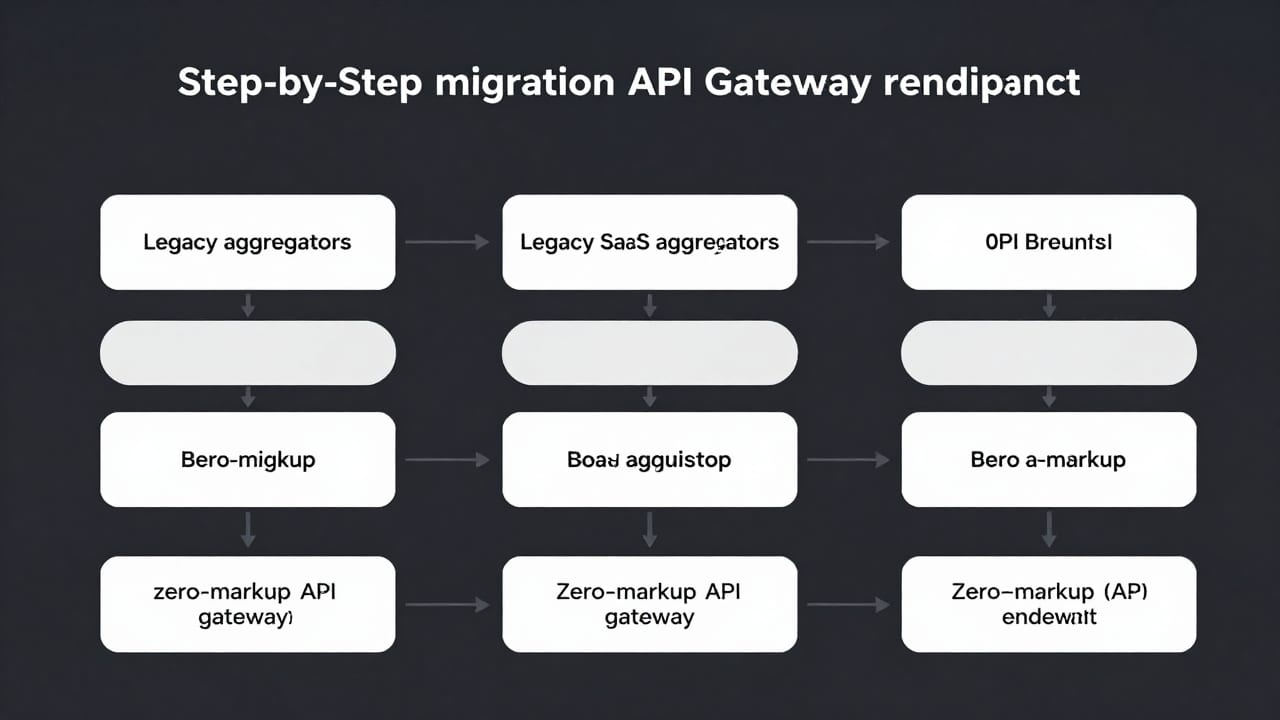
Migrating to a streamlined routing system does not require rebuilding your software from scratch. A smooth transition involves three systematic steps that preserve uptime and data integrity.
Step 1: Audit your historical API spend. Review your last three months of invoices across every third-party service, SaaS plugin, and direct AI account. Categorize the spend into compute costs versus platform middleware markups to identify immediate savings opportunities.
Step 2: Update your API routing endpoints. Zero-markup gateways use standard OpenAI-compatible request formats. In most codebases, switching over requires changing only two lines of code: updating your target base URL and replacing your authorization key.
Step 3: Run parallel load tests. Route 10% of your production traffic through the new gateway for 48 hours. Monitor response latency, token usage accuracy, and output quality before shifting your entire application load.
If you want to cut agency AI expenses but lack the internal engineering bandwidth to execute the migration safely, the team at CodeRift services can manage the transition for you.
Key Takeaways: Protecting Your Margins with Zero-Markup AI
- Eliminate the middleman tax: Traditional wrappers add 15% to 50% surcharges on token consumption, draining agency retainers and client budgets without adding functional value.
- Leverage raw provider pricing: A zero-markup gateway gives your business direct wholesale rates from major AI providers with complete invoice transparency.
- Optimize query routing: Pairing zero-markup endpoints with tiered model selection allows you to route basic tasks to low-cost models, slashing operational overhead.
- Create stable, predictable packages: Removing variable infrastructure markups enables agencies to sell fixed-price, profitable small business AI retainers.
- Migrate with minimal effort: Because modern gateways adhere to universal API standards, you can upgrade your routing with near-zero codebase disruption.
Frequently Asked Questions
How do zero-markup gateway providers make money if they do not mark up tokens?
Zero-markup providers typically charge a transparent, flat monthly subscription fee or a low flat rate for advanced enterprise features like custom security compliance, specialized logging, and high-availability caching. This aligns their business model with your success rather than penalizing your traffic growth.
Will routing requests through a model gateway increase response latency?
High-performance gateways add virtually zero perceptible latency, usually less than 15 to 30 milliseconds per request. In many cases, their intelligent edge routing and global prompt caching actually make your applications respond faster than connecting directly to overloaded primary endpoints.
Is my business data secure when passing through a model gateway?
Leading enterprise gateways act purely as pass-through routers without logging, storing, or training models on your proprietary prompt data. Always ensure that your gateway agreement complies with SOC2, GDPR, and standard data privacy regulations before routing sensitive client inputs.
Ready to Slash Your AI Infrastructure Costs?
Building high-performing, profitable AI solutions for small business clients should not require eating surprise platform fees or settling for bloated infrastructure. With the right architecture, you can provide enterprise-grade capabilities while keeping operating expenses razor-thin.
At CodeRift, we help modern businesses and agencies design, audit, and deploy lean, scalable software systems built for long-term growth. If you are ready to identify hidden expenses in your tech stack and streamline your API overhead, reach out to our engineering team or book a free infrastructure audit call today.