Why AI is the New Secret Weapon for Small Business Owners
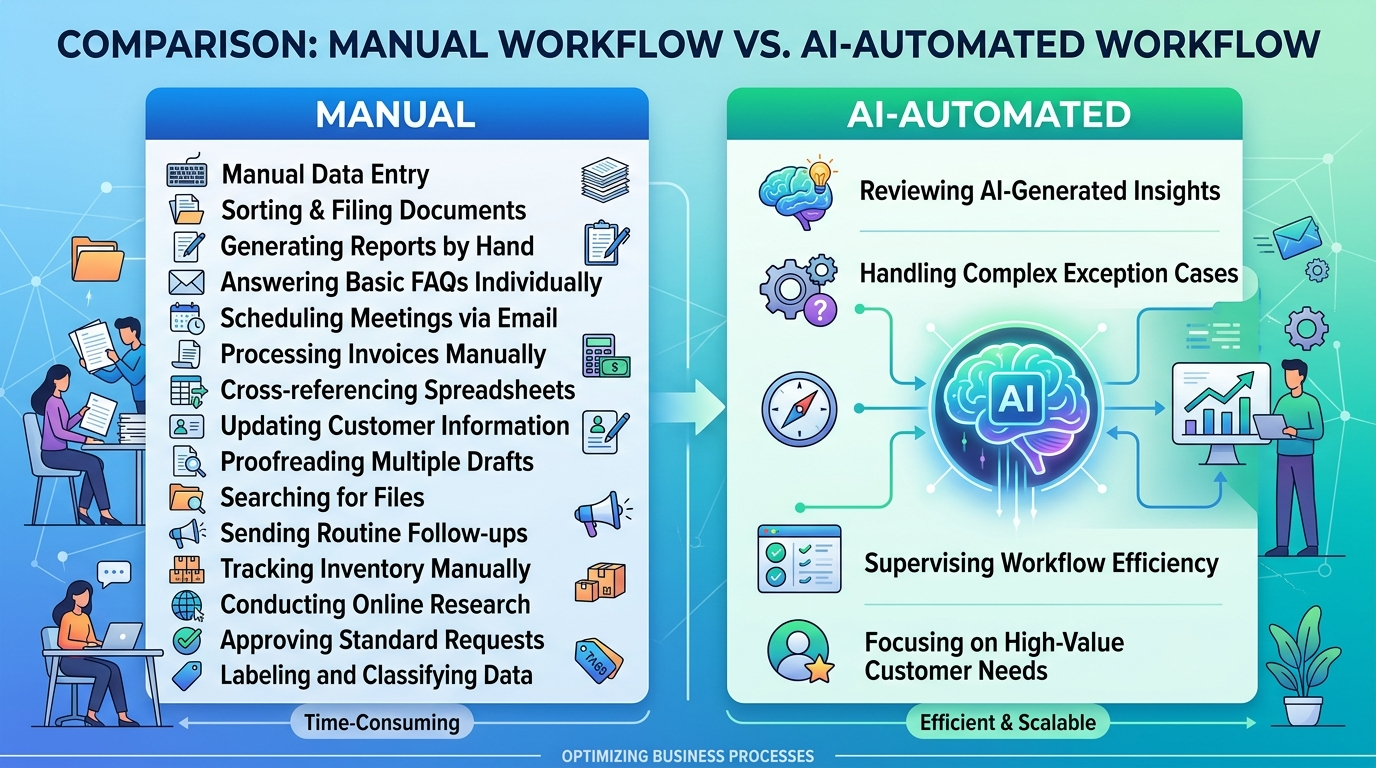
Yet, for most founders in 2026, the "daily grind" feels more like a mountain of administrative busy work. This is where AI for small business transforms from a futuristic concept into a practical, everyday survival tool.
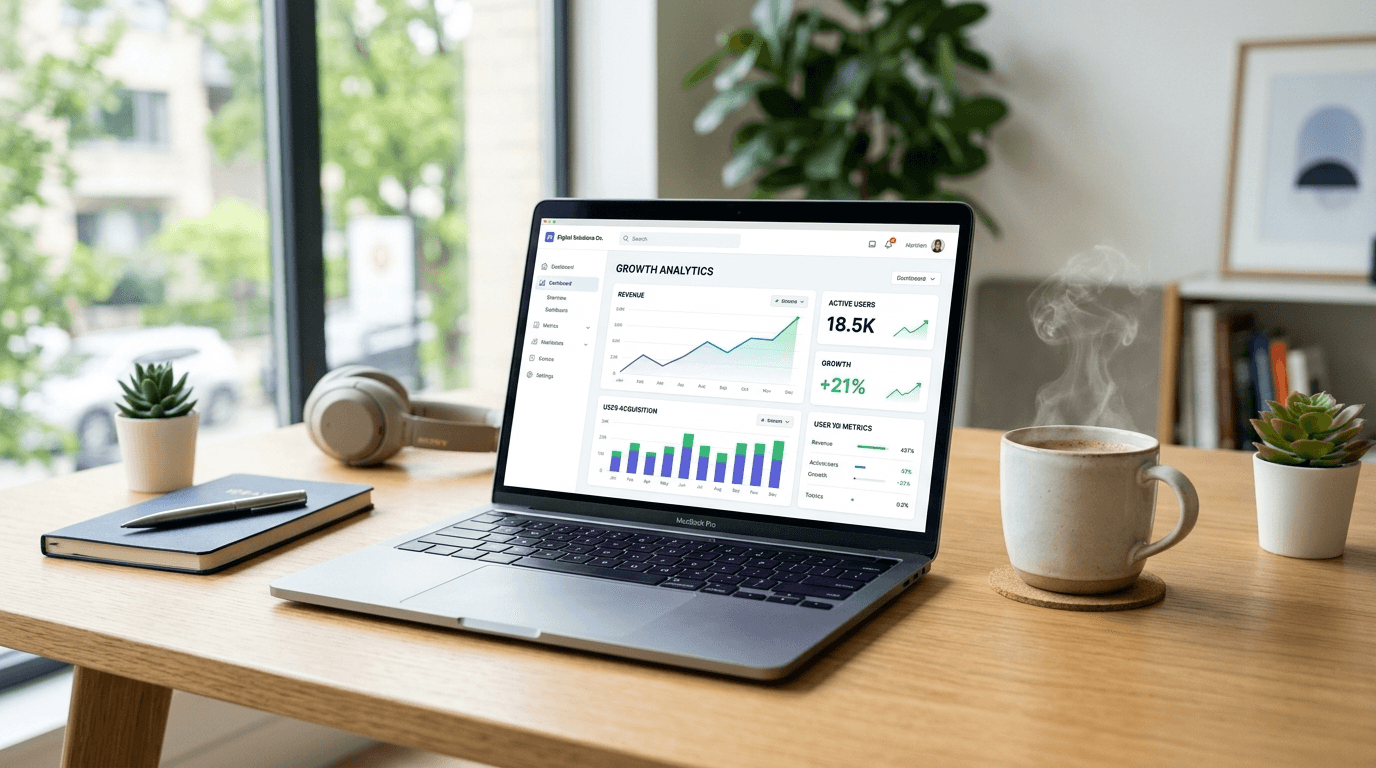
Recent 2026 data shows that small businesses leveraging AI automation are growing 35% faster than their manual counterparts. The difference isn't just technology; it's the ability to focus on high-value tasks.
AI isn't just for Silicon Valley giants anymore. It is the great equalizer that allows a three-person team to output the same volume as a thirty-person department.
The goal is simple: move from "busy work" to "growth work." Every hour you spend on a spreadsheet is an hour you aren't closing a deal or refining your product.
By the end of this guide, you’ll see exactly how to reclaim 10+ hours of your week using simple, accessible AI tools that require zero coding knowledge.
Stop Writing from Scratch: AI for Content and Social Media
The "blank page syndrome" is one of the biggest time-wasters in modern business. Whether it’s a LinkedIn post, a monthly newsletter, or a promotional email, the starting process is often the slowest part.
Using AI for small business marketing allows you to generate a month’s worth of social media captions in under fifteen minutes. Instead of staring at a blinking cursor, you start with a 90% finished draft.
Tools like ChatGPT, Claude, and Jasper have evolved significantly by 2026. They can now learn your specific brand voice, ensuring that the content they produce sounds like you, not a generic robot.
Create a "Brand Voice File." Upload your best-performing emails and posts to your AI tool and ask it to "Analyze this tone and use it for all future drafts."
Professional emails that used to take twenty minutes to perfect can now be drafted in seconds. You provide the bullet points; the AI provides the polish, professional tone, and clear call to action.
Small businesses are also using AI to repurpose content. A single five-minute video of you explaining a product can be turned into three blog posts, five tweets, and two Instagram Reels captions automatically.
Never Miss a Lead: Automating Customer Support
In 2026, customers expect an immediate response. If you take four hours to reply to a Facebook message or a website inquiry, that lead has likely already moved on to your competitor.
Setting up AI-powered chatbots is no longer a complex IT project. Modern "no-code" platforms allow you to feed your FAQ page into an AI that can answer 80% of customer questions instantly, 24/7.
This doesn't mean you're removing the human touch. It means you're filtering out the "What are your hours?" and "Do you ship to Canada?" questions so you can focus on the complex, high-value conversations.
Avoid the "Uncanny Valley." Always be transparent with customers. A simple "I'm the [Company Name] AI Assistant" builds more trust than trying to pretend the bot is a human named Sarah.
Beyond chatbots, AI can sort and prioritize your customer service inbox. It can flag "angry" emails for immediate attention and categorize others into "billing," "technical," or "sales" folders automatically.
This ensures that you never miss a high-priority lead in a sea of newsletters and spam. Instant responses lead to higher satisfaction scores and, ultimately, more closed sales.
Reclaim Your Calendar: AI for Scheduling and Meetings
How many emails does it take to schedule one 30-minute Zoom call? Usually, it's three or four. Multiply that by ten meetings a week, and you’re losing hours to "calendar tetris."
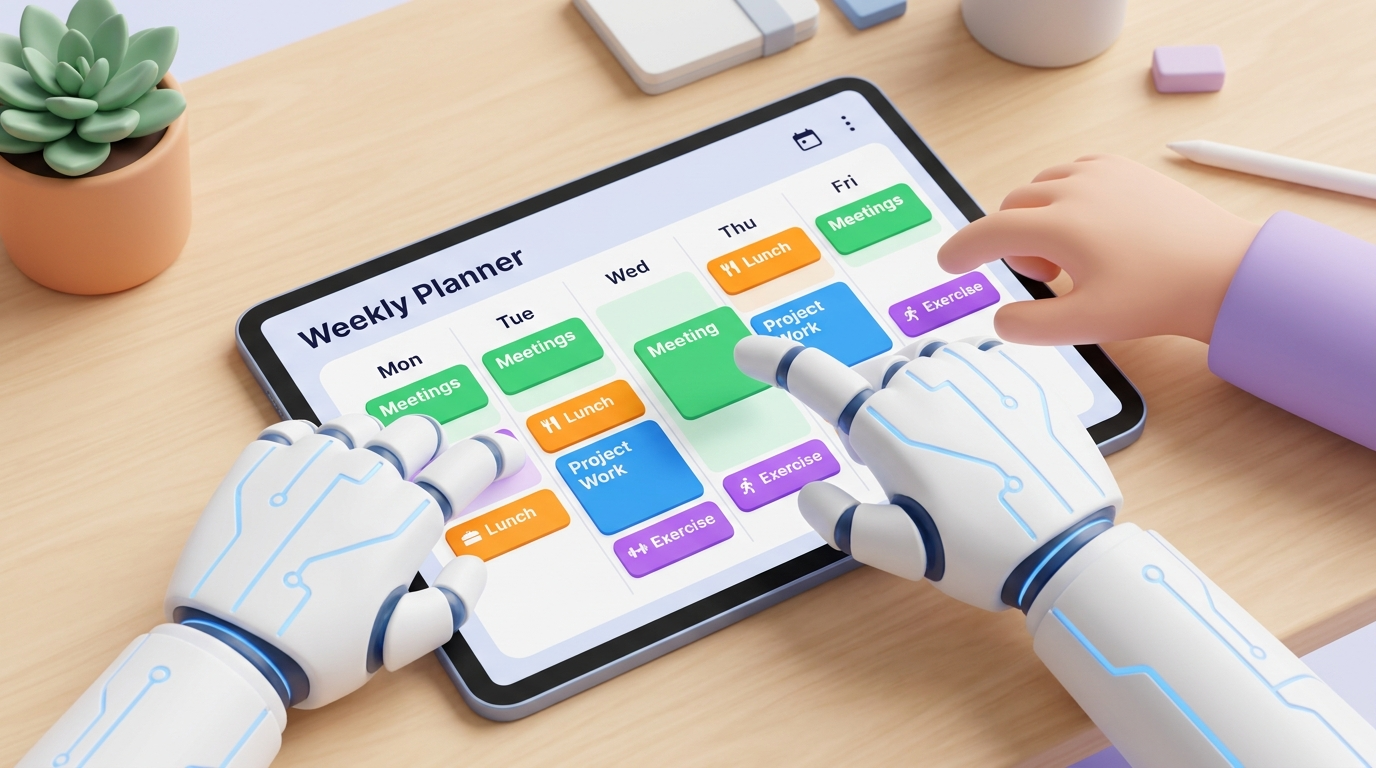
AI scheduling assistants have moved beyond simple booking links. They can now analyze your habits, protect your "deep work" blocks, and suggest times when you are most productive.
During the meetings themselves, AI meeting assistants like Otter or Fireflies are game-changers. They record, transcribe, and—most importantly—summarize the key takeaways and action items.
Save time with AI by never having to manually write a "recap" email again. The AI identifies who promised to do what and sends a summary to all participants five minutes after the call ends.
The average small business owner spends 15% of their week in meetings. AI summarization can reduce the "follow-up" work associated with those meetings by up to 70%.
Furthermore, these tools can act as a searchable database of your business knowledge. Can’t remember what you promised a client six months ago? Search your meeting transcripts for the keyword, and the answer appears instantly.
Simplify Your Finances: AI for Bookkeeping
Bookkeeping is the chore most small business owners dread. It’s tedious, prone to human error, and usually happens late on a Friday afternoon when you’d rather be anywhere else.
AI has revolutionized this space by automating the categorization of expenses. When you swipe your business card, AI looks at the vendor and automatically logs it under "Travel," "Software," or "Office Supplies."
Invoice generation is another area where you can automate small business tasks. AI can track when a project is completed, generate the invoice, and even send polite, automated follow-up reminders if the payment is late.
Use AI to flag anomalies. Modern accounting software can alert you if a subscription price suddenly jumps or if a duplicate payment is made, saving you money before you even realize there's a problem.
Instead of spending your time in spreadsheets, you can use AI to analyze your profits. You can ask, "Which of my services was most profitable last quarter?" and get a data-driven answer in seconds.
This shifts your role from a data-entry clerk to a Chief Financial Officer. You stop looking at what happened in the past and start making better decisions for the future.
How to Get Started (Even if You Aren't Tech-Savvy)
The biggest mistake small business owners make is trying to automate everything at once. This leads to "tool fatigue" and eventually, you go back to your old manual ways.
Start small. Pick exactly one repetitive task that you hate doing. Maybe it’s writing social media posts, or maybe it’s summarizing your weekly team meeting.
Choose user-friendly tools with simple "plug and play" setups. Most AI tools in 2026 are designed for the non-technical user. If it takes more than 30 minutes to learn, it’s probably the wrong tool for you.
Focus on the "Return on Time" (ROT). If a tool costs $30 a month but saves you five hours of work, that is a massive win for your business. Your time is your most expensive resource.
Don't automate a broken process. If your current workflow is messy, AI will just make it "messy but faster." Clean up your process first, then apply the automation.
Your 10-Hour Savings Plan: A Weekly Breakdown
If you're wondering where those 10 hours actually come from, here is a realistic breakdown of a typical week for a small business owner using AI:
- Marketing (4 Hours Saved): Use AI to draft 4 blog posts, 10 social media captions, and 2 email newsletters. What used to take a full afternoon now takes 45 minutes of reviewing and editing.
- Admin & Communication (3 Hours Saved): AI handles meeting transcriptions, summarizes long email threads, and manages your scheduling back-and-forth.
- Operations & Support (3 Hours Saved): An AI chatbot handles basic customer inquiries, and automated bookkeeping handles expense categorization and invoicing.
That is 10 hours of your life back. That is time you can spend with your family, at the gym, or—most importantly—working on the strategic moves that will double your revenue.
Image: A simple infographic chart showing the 4-3-3 hour breakdown.
Is AI for small business expensive to implement?
In 2026, most AI tools offer "freemium" models or low-cost tiers specifically for small teams. You can often start for $0 to $50 per month. The cost of not using AI—in terms of lost productivity and slow response times—is significantly higher than the subscription fees.
Will AI replace my small team?
AI is a "force multiplier," not a replacement. It handles the boring, repetitive tasks so your team can focus on things humans are good at: empathy, complex problem-solving, and building real relationships with your customers. It makes your current team more effective, not redundant.
Security has improved drastically. Most reputable AI providers now offer "Enterprise Grade" security even on smaller plans. Look for tools that are SOC2 compliant and ensure your settings don't allow the provider to use your private data to train their public models.
Ready to stop wasting time on "busy work" and start scaling your business? At CodeRift Agency, we help small businesses identify the exact bottlenecks holding them back and implement the right automation tools to fix them.
Book a free 15-minute AI audit call with CodeRift today and let’s find your first 10 hours.