What Is HubSpot Quote-to-Cash? (And Why Small Businesses Need It)
For years, small businesses treated their CRM as a digital Rolodex. It stored phone numbers, tracked email exchanges, and logged sales pipeline stages. Once a deal was won, the sales rep had to leave the CRM to build an estimate in another app, generate a PDF contract, and email a separate accounting invoice.
That disconnected approach creates needless friction. HubSpot's recent commerce upgrades transform your CRM into an active revenue engine. With built-in CPQ (Configure, Price, Quote) capabilities and native payment gateways, you turn standard sales conversations into settled bank deposits without switching browser tabs.
At CodeRift, we have audited over 100 small business sales pipelines. The teams losing the most revenue are rarely failing at lead generation. They are losing deals during the administrative gap between verbally agreeing on price and collecting payment.
When you unify your sales tracking with payment collection, you eliminate unnecessary delays. Sales reps spend less time formatting documents and more time talking to qualified prospects. Your buyers get a frictionless checkout experience that looks professional and modern.
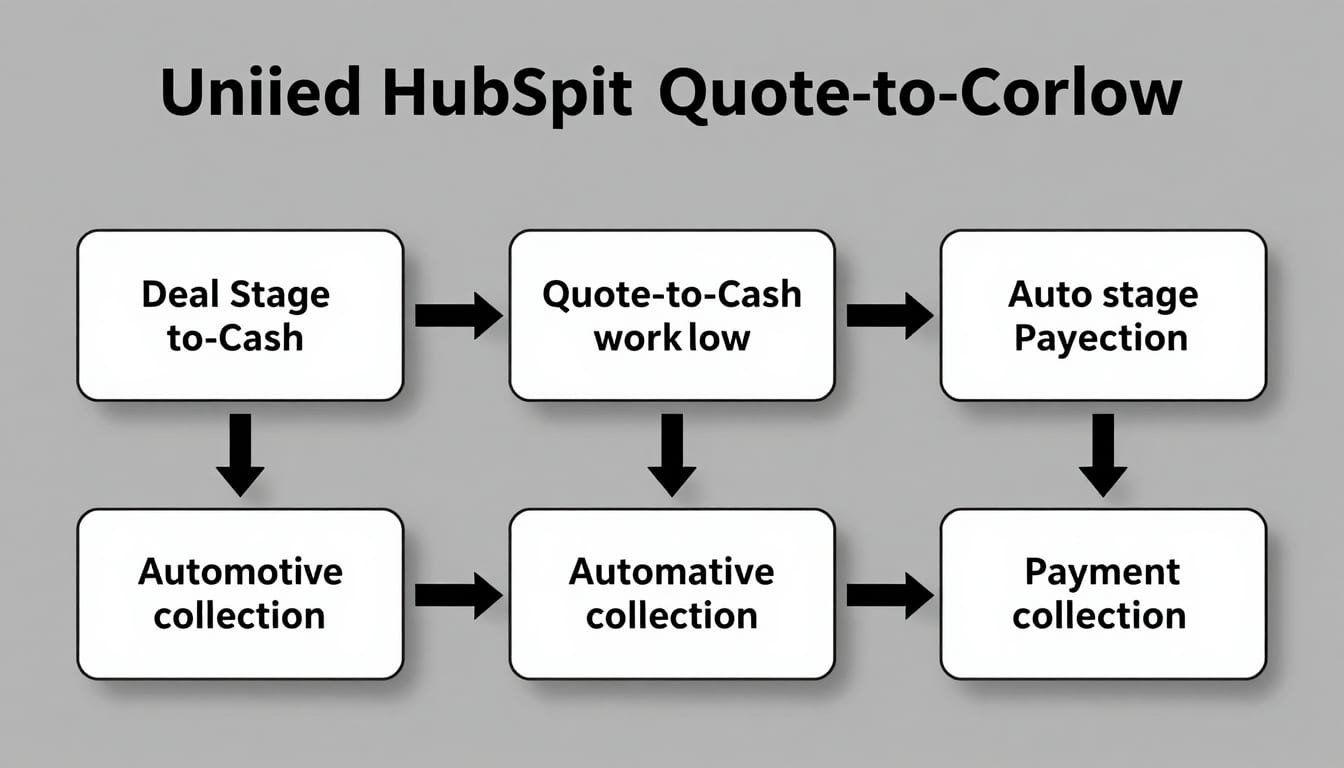
Most small businesses run a fragmented software stack without realizing how much money it costs them. A typical setup involves one tool for CRM tracking, another for digital signatures, Stripe for credit card processing, and an accounting system for manual invoicing.
This tech sprawl forces your team to manually copy data across three or four dashboards. Every time a sales rep retypes a client's address or package price into an external invoicing app, the risk of human error climbs. A single typo can lead to inaccurate invoices, delayed revenue, and awkward customer conversations.
Manual administrative drag also slows down your cash flow. When quotes require manual drafting and offline signatures, deals sit stagnant in proposal stages for days. Buyers get distracted, priorities shift, and your close rates drop.
Chasing unpaid invoices manually costs small businesses an average of 15 to 20 administrative hours every month. Fragmented software makes it almost impossible to know who owes what without cross-referencing multiple dashboards.
Tracking down payment statuses across disconnected tools creates blind spots for leadership. Sales managers cannot accurately forecast monthly cash flow when paid receipts live in an accounting software that sales reps cannot access. A unified CRM to cash workflow removes this communication barrier entirely.
Which HubSpot Quote-to-Cash Features Speed Up Cash Flow?
HubSpot Commerce Hub introduces specialized tools designed to compress the sales cycle. These features allow service providers, agencies, and B2B companies to modernize how they package, price, and collect revenue.
Understanding these core capabilities helps you decide which manual tasks to eliminate first:
- Interactive digital quotes: Send dynamic web-based proposals where clients can select optional add-ons, pick package tiers, sign electronically, and pay via credit card or ACH on a single screen.
- Automated billing triggers: Configure workflows that instantly generate invoices, charge stored payment methods, or initiate onboarding tasks the moment a deal reaches 'Closed-Won'.
- Subscription and retainer management: Set up automated recurring billing schedules for monthly retainers, software licenses, or maintenance contracts without buying extra plugins.
- HubSpot CPQ tools and product libraries: Maintain a centralized catalog of products, custom pricing tiers, and SKU discounts so reps build error-free proposals in seconds.
- Automated payment reminders: Trigger polite, branded email sequences before an invoice is due and immediately after a payment fails or lapses.
To maximize conversions on high-ticket service quotes, enable ACH bank transfers alongside credit cards. Buyers get flexible payment options, and your business saves substantial capital on merchant processing fees.
When you automate client invoicing in HubSpot, you remove human bottlenecks. Your customer signs the agreement and enters their payment details in one sitting. The system updates the deal record, notifies account managers, and logs payment confirmation automatically.
How Does HubSpot Compare to Traditional Invoicing Systems?
Traditional invoicing tools like QuickBooks, FreshBooks, or Xero excel at general ledger accounting and tax compliance. However, they were never designed to function as collaborative sales tools. They lack contextual conversation histories, automated sales pipeline stage triggers, and customer engagement metrics.
Running your sales quotes through traditional accounting software keeps sales and finance operating in silos. Finance does not know which deals are close to signing, and sales reps have no idea whether an onboarding client has paid their initial deposit.
| Operational Feature | Traditional Disconnected Stack | HubSpot Quote-to-Cash Setup |
|---|
| Proposal Delivery | Static PDF attachments sent via email or separate e-sign software. | Interactive, mobile-responsive web links with live checkout options. |
| Payment Processing | Separate invoice link sent days after contract signature. | Simultaneous digital signature and instant payment on the same page. |
| Pipeline Visibility | Manual updates required between CRM and accounting tool. | Real-time deal stage automation triggered by verified payment receipt. |
| Recurring Billing | Requires third-party subscription software or manual monthly invoicing. | Native recurring billing schedules managed directly inside the CRM. |
| Customer Experience | Fragmented touchpoints across multiple separate portals and links. | Single, seamless, professional branded experience from quote to onboarding. |
Adopting HubSpot revenue operations for small business does not mean throwing away your accounting software. You still keep tools like QuickBooks or Xero for backend ledger reporting, payroll, and tax filings.
The difference is that HubSpot handles the front-end customer interaction. Your sales team operates entirely within HubSpot to generate quotes and receive payments. That transaction data then syncs quietly to your accounting ledger via background integrations, keeping both departments aligned.
Real-World Example: How a 12-Person Agency Cut Days Off Their Sales Cycle
Consider a regional digital marketing agency that sells custom website builds and monthly SEO retainers. In their previous setup, closing a new client required five disjointed steps over several days.
First, the rep prepared a proposal in Google Docs and exported a PDF. Next, they uploaded the PDF to DocuSign for signatures. Once signed, an administrative assistant manually typed a new customer profile into QuickBooks and emailed an invoice with a Stripe link.
This clumsy process caused serious issues. Clients frequently signed the contract but delayed paying the invoice for two weeks, stalling project kickoffs. Furthermore, setting up the recurring monthly retainer required manual monthly card charges by the agency's operations lead.
By implementing a unified HubSpot quote-to-cash workflow, the agency rebuilt their checkout experience:
- Single-page approvals: Web-based quotes combined the project scope, terms of service, e-signature line, and initial deposit payment on one page.
- Automated retainer scheduling: The recurring monthly SEO fee was authorized during the initial checkout, scheduling automatic future billing.
- Instant onboarding triggers: Successful payment automatically moved the deal to 'Closed-Won', created a project record, and notified the account manager in Slack.
The result was an immediate reduction in their average time-to-payment from 11 days down to under 24 hours. Administrative labor spent managing billing dropped by 80%, allowing the agency to scale without hiring extra back-office staff.
Key Takeaways: Modernizing Your Pricing and Payment Workflow
- Eliminate friction between closing and paying: Combining sales proposals, digital signatures, and merchant payments into one link drastically reduces lost deals and payment lag.
- Automate your back-office pipeline: Using small business payment automation allows deal stages, customer onboarding tasks, and receipts to update instantly upon transaction approval.
- Protect your team's productive hours: Centralizing product catalogs and quoting templates inside HubSpot CPQ tools prevents pricing errors and eliminates hours of manual data entry.
- Unify sales and accounting data: Front-end customer payments belong in your CRM where sales reps work, while backend ledger syncs keep accounting accurate for taxes.
- Secure predictable cash flow: Native recurring billing workflows ensure monthly retainers and subscription renewals process on time without chasing late payments.
Frequently Asked Questions
Does HubSpot quote-to-cash replace QuickBooks or Xero?
No, HubSpot does not replace your core accounting platform. It replaces the customer-facing invoicing, quoting, and payment collection tools that create friction during sales conversations. Your accountant will still use QuickBooks or Xero for end-of-year tax prep, payroll, bank reconciliations, and profit-and-loss statements via direct software syncs.
What HubSpot subscription tier do I need to collect payments?
Basic payment links and quote capabilities are available across Starter tiers of HubSpot. However, advanced automated invoicing triggers, custom CPQ product libraries, dynamic quote templates, and recurring subscription automation generally require HubSpot Sales Hub or Commerce Hub Professional editions.
How secure are customer payments processed through HubSpot?
HubSpot processes transactions through integrated, PCI-compliant infrastructure powered by Stripe. Sensitive card details and banking credentials are encrypted and stored within secure payment networks, meaning your business never stores raw credit card numbers on your local servers or CRM records.
Ready to Automate Your Revenue Operations with CodeRift?
Setting up quotes, payment gateways, and automated deal stages can feel overwhelming if you are managing day-to-day business operations. Many teams try to configure CPQ tools on their own, only to end up with broken workflows, failed webhooks, and confused clients.
At CodeRift, we build frictionless revenue operations engines for growing businesses. We configure your HubSpot Commerce Hub pipelines, connect your accounting integrations, structure your product catalog, and deploy custom quote templates tailored to your exact service offerings.
Stop chasing overdue invoices across three different software platforms. Book a free discovery call with CodeRift today, and let our team streamline your client billing process with zero downtime.