What Is an Autonomous AI CRM and Why Does It Matter in 2026?
If you run a small business, you already know the painful reality of customer relationship management. Most platforms require hours of data entry, manual tag sorting, and copy-pasting meeting notes just to stay moderately organized.
Recent funding rounds for next-generation platforms like Superleap indicate a massive shift in how software handles sales. The market is moving away from passive record-keeping software toward proactive AI sales agents that manage your back-office pipeline automatically.
At CodeRift, we have audited sales workflows for dozens of small service and B2B companies. Most business owners lose between 8 and 12 hours every week simply copying data between email inboxes, calendar events, and CRM dashboards.
This technological wave is not about replacing human sales relationships. It is about removing the repetitive administrative friction that prevents business owners and lean sales teams from speaking with high-value prospects.
By adopting an AI CRM for small business, you gain the operational leverage of a dedicated sales operations department without adding extra payroll overhead.
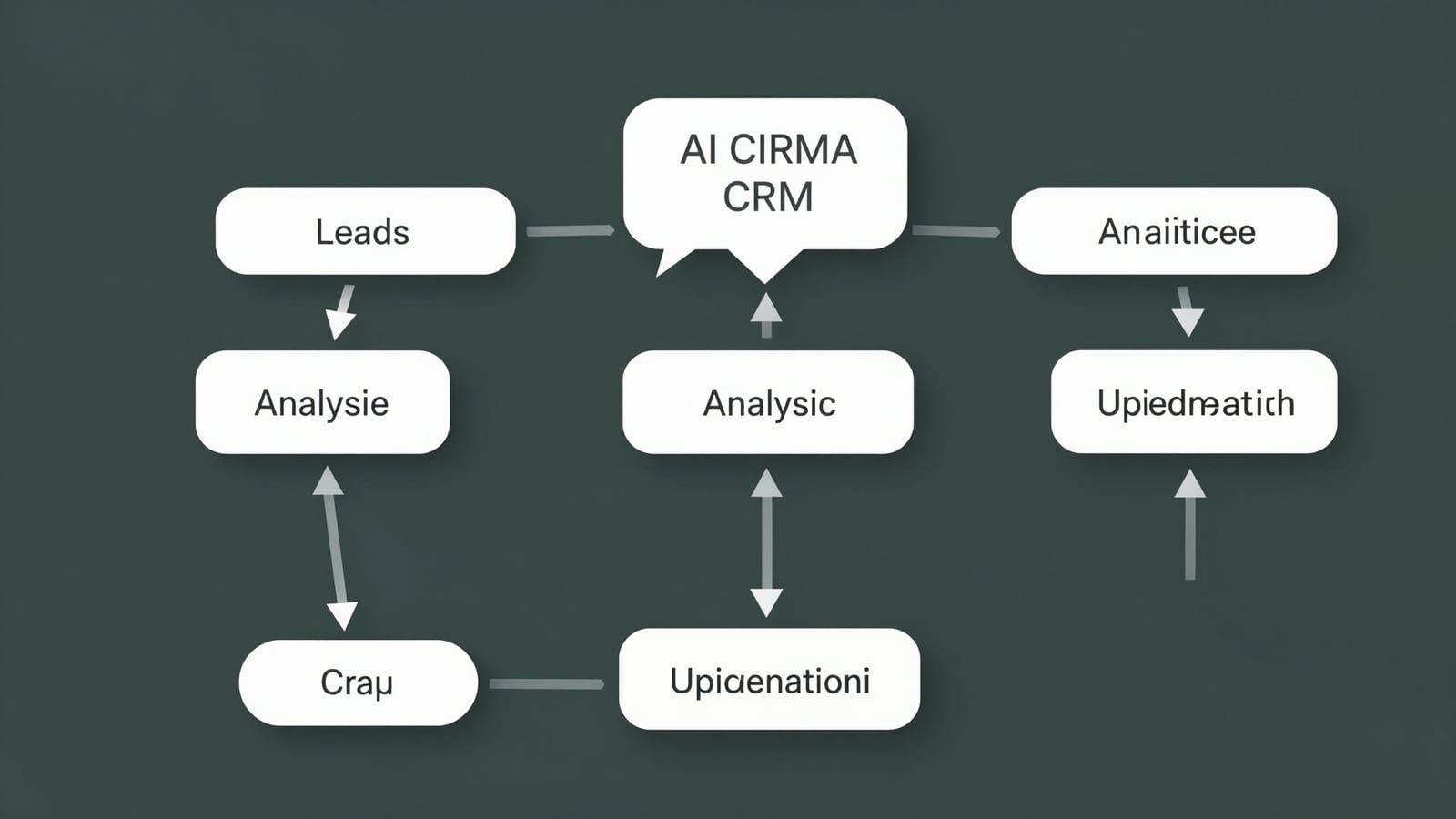
Why Do Traditional CRMs Fail Small Businesses?
Traditional CRMs were built for massive corporate enterprises with dedicated administrators whose sole job is database hygiene. For a small business owner wearing five different hats, those same software tools quickly become expensive, abandoned digital filing cabinets.
When you finish a client meeting or discovery call, your primary goal is solving their problem or writing a quote. Logging call notes, setting follow-up reminder tasks, and changing deal stages in a dashboard often gets pushed to the end of the week.
Once data entry slips, your CRM data goes stale. You forget which lead requested a revised proposal, follow-up emails fall through the cracks, and revenue leaks out of your business quietly.
Studies consistently show that over 40% of CRM software implementations fail or get abandoned by small teams due to excessive data entry burdens and complex user interfaces.
This is where small business sales automation shifts the equation. Instead of demanding that you feed the database, modern autonomous agents feed relevant insights and action items directly to you.
When software works in the background rather than demanding constant manual inputs, sales teams maintain pristine pipelines without disrupting their daily workflow.
Traditional CRM vs. Autonomous AI CRM: What Changes for You?
The core difference between legacy sales platforms and next-generation autonomous tools comes down to active versus passive functionality. A traditional tool waits for your instructions, while an autonomous system monitors interactions and executes routine work proactively.
Understanding these differences helps business owners evaluate whether upgrading their tech stack makes financial sense. The operational gap between manual data entry and automated execution is substantial.
| Feature / Capability |
Traditional Sales CRM |
Autonomous AI CRM |
| Lead Data Capture |
Manual form fills or basic zap integrations with missing context. |
Auto-enriches contact profiles, company background, and intent data instantly. |
| Meeting Documentation |
Owner must type notes, summarize discussion, and assign manual tasks. |
Transcribes calls, generates action items, and syncs summaries directly to the deal. |
| Email Follow-Up Drafting |
Sales rep writes emails manually from scratch or uses generic static templates. |
Drafts context-aware, hyper-personalized replies based on prior call transcripts. |
| Pipeline Stage Updates |
Manual drag-and-drop updating across stages after every interaction. |
Automatically moves deals forward based on conversation sentiment and milestones. |
| Daily Admin Time Spent |
60 to 90 minutes per representative every single day. |
Under 10 minutes per representative for quick reviews and approvals. |
As shown in the comparison above, automated sales operations do not remove human decision-making. Instead, they shift your role from administrative data clerk to reviewer and strategic closer.
You no longer spend Sunday evening reconciling spreadsheets or catching up on logging customer interactions from the previous week.
What Sales Tasks Can Autonomous AI Agents Take Off Your Plate Today?
Autonomous sales tech in 2026 has advanced far beyond generic chatbot scripts and rigid rules-based email sequences. Modern agents understand context, interpret unstructured conversation data, and make logical operational decisions.
Here are the key sales workflows you can completely offload to intelligent software today:
1. 24/7 AI Lead Follow Up and Instant Qualification
Speed to lead is the single most critical factor in winning new business. When a prospective customer submits an inquiry on your website, waiting four hours to respond drastically lowers your conversion rate.
Modern AI lead follow up agents engage incoming inquiries within seconds, evaluate their budget and project scope, and guide qualified buyers directly to your calendar booking link. Unqualified inquiries are filtered out before they consume your valuable time.
2. Automated Meeting Summaries and CRM Logging
During a high-stakes discovery call, your focus should be entirely on the prospect, not scrambling to jot down every detail. Autonomous tools join your video meetings, record the discussion, and extract critical operational points.
The agent automatically extracts customer pain points, budget constraints, timeline expectations, and competitors mentioned. It then logs these insights directly into your customer profile without missing a beat.
3. Contextual Email Follow-Up Drafting
Writing personalized follow-up emails after every client interaction consumes massive chunks of mental energy. Generic templates feel cold and detached, but writing bespoke messages from scratch takes 15 minutes per contact.
Autonomous agents draft tailored emails referencing specific talking points from your recent conversation. All you have to do is review the draft, make minor tweaks if needed, and hit send.
4. Pipeline Hygiene and Stalled Deal Triage
Deals frequently slip through the cracks simply because nobody followed up on an unanswered proposal. Autonomous agents monitor your active pipeline continuously to identify deals that have gone cold.
When an opportunity sits dormant for too long, the system alerts you with a suggested re-engagement message customized to that prospect's original pain points.
Always maintain a "human-in-the-loop" review step for high-stakes outbound quotes and final contract negotiations. Use AI to draft the heavy lifting, but keep final message approvals in human hands.
How Can Small Businesses Prepare for Automated Sales Operations?
You do not need an in-house engineering team to implement autonomous sales software. However, jumping into automation without clear foundational processes will only amplify existing organizational chaos.
Following a structured implementation strategy ensures you get immediate return on investment while keeping your customer experience smooth and professional.
- Audit your biggest administrative bottlenecks: Track your daily sales activities for one full week. Pinpoint the specific manual tasks—like meeting note logging, calendar scheduling, or quote chasing—that consume the most time.
- Clean your existing contact data: Before plugging in autonomous agents, remove duplicate contacts, standardize your deal stages, and archive dead leads. Clean data produces far more accurate AI suggestions.
- Start with a single high-impact workflow: Avoid trying to automate your entire revenue cycle overnight. Start by automating call summaries or instant lead responses, then expand once your team feels confident.
- Establish clear communication guidelines: Define your company's tone of voice, banned phrases, and standard pricing parameters so that AI-drafted communications align perfectly with your brand identity.
- Train your team to review rather than input: Teach your sales reps how to inspect agent-generated drafts and action items quickly. The goal is moving from typing data to approving intelligence.
Never connect an autonomous tool directly to your prospect list without setting safety boundaries and review steps. Unchecked automation can send inaccurate details to valuable clients if rules are not clearly defined.
If you want to review your company's digital infrastructure before adding automated agents, check out our insights on the CodeRift blog to learn how modern tech stacks integrate smoothly.
Key Takeaways on Autonomous AI Sales Technology
- CRMs are shifting from databases to active co-pilots: The primary value of sales software in 2026 is no longer passive storage, but active task execution and automated follow-up.
- Small teams gain enterprise-level sales power: Autonomous software lets micro-teams and solo founders operate with the speed and responsiveness of a dedicated 10-person sales operations department.
- Human relationships remain the core driver of closed deals: AI handles data entry, scheduling, and drafting so that your team can spend 100% of their energy building authentic client trust.
- Clean foundational processes are mandatory: Automation magnifies your current sales habits; setting clean pipeline stages and clear brand guardrails is essential before launching agents.
- Phased adoption yields the highest return: Starting with one specific bottleneck, such as automated meeting summaries, delivers quick wins without overwhelming your daily operations.
Will autonomous AI sales agents replace human salespeople?
No, autonomous AI tools are built to eliminate administrative overhead, not replace human connection. In high-value B2B and service sales, clients buy from people they trust. AI agents handle data entry, schedule coordination, and follow-up reminders so that salespeople can spend more time having genuine conversations with qualified prospects.
How much does an AI CRM for small business cost to set up?
Costs vary depending on your team size and the level of custom integration required. Off-the-shelf AI CRM platforms typically start between $30 and $100 per user per month. For businesses needing custom agent integrations and end-to-end pipeline architecture, you can review our transparent options on our pricing page.
Yes, provided you choose reputable business-grade software providers that adhere to strict privacy standards like SOC-2, GDPR, and enterprise encryption protocols. Modern platforms isolate client data and explicitly guarantee that your private business records and customer communications are not used to train public AI models.
How CodeRift Agency Helps You Build an Autonomous Sales Engine
Navigating the rapid evolution of sales technology can feel overwhelming when you are already busy running day-to-day business operations. Choosing the wrong tools leads to wasted subscription fees and frustrated team members.
At CodeRift Agency, we design and implement custom digital systems, smart automations, and modern web platforms tailored specifically to growing businesses. Our comprehensive services help you cut out manual friction, clean up your pipeline, and build a reliable revenue engine that works around the clock.
Whether you need help selecting the right CRM stack, connecting automated workflows, or overhauling your digital lead generation, we handle the technical heavy lifting so you can focus on closing deals.
Ready to reclaim 10+ hours of wasted admin time every week? Reach out directly via our contact page or book a free strategy audit call with our team today to see what modern automation can do for your business.