What Are Operational AI Agents? (And Why Small Businesses Need Them)
For years, small business owners used AI primarily as a writing assistant or a basic chatbot. You typed a prompt into a text box, waited for a response, and copied that text into an email or document. While helpful, that manual back-and-forth created its own operational bottleneck.
In 2026, AI agents for small business have evolved from reactive chat windows into proactive team members. Instead of waiting for you to tell them what to do, operational agents monitor your tools 24/7, detect when a task needs doing, and complete it according to strict business rules.
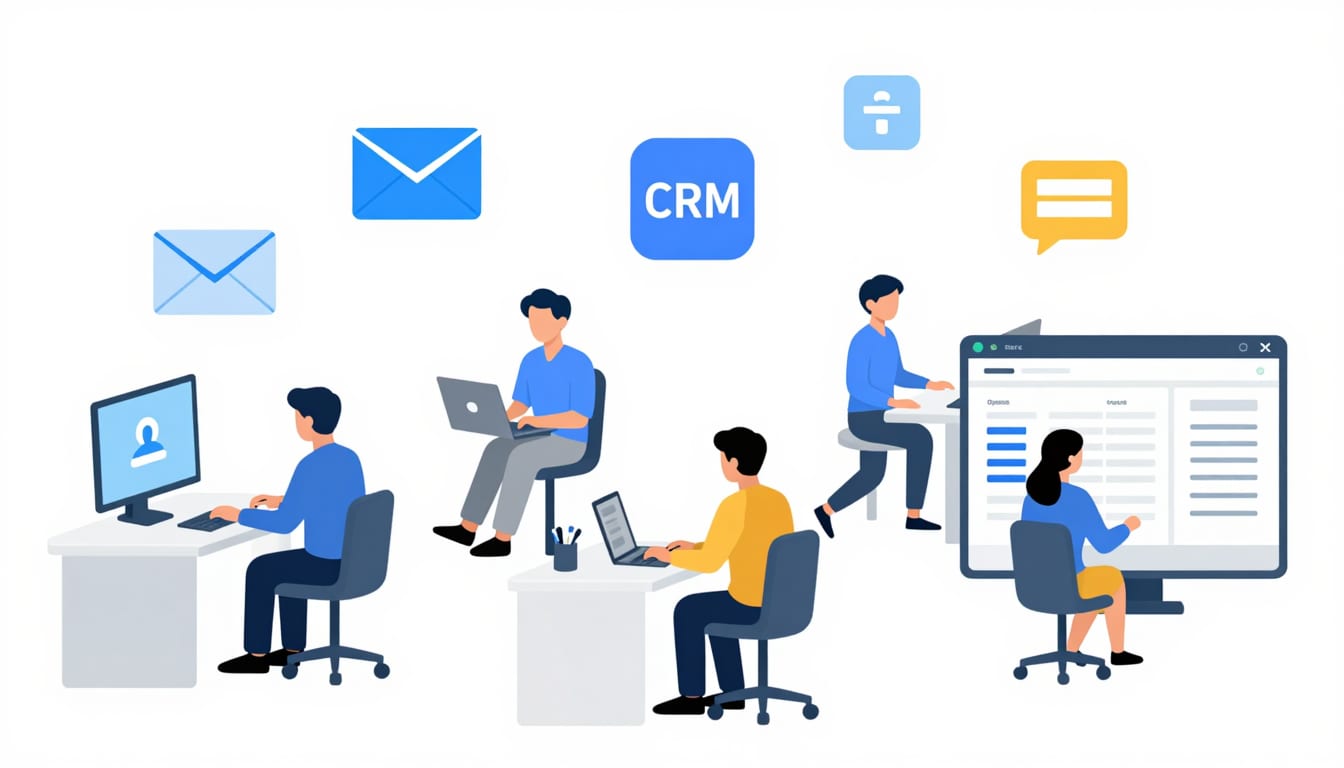
This shift solves the classic scaling dilemma faced by small operations. When order volumes spike or customer inquiries surge, you no longer have to choose between burning out your core staff or hiring expensive full-time administrative help.
By delegating structured, repetitive back-office jobs to specialized agents, your human team can focus on client relationships, creative problem-solving, and revenue-generating strategy.
Why Does the Multi-Agent Workflow Model Work Better Than All-in-One Tools?
Enterprise platforms like Creatio recently proved a vital operational principle: assigning one discrete job to one specialized AI agent delivers far better accuracy than forcing a single mega-bot to do everything. When you try to build one monolithic AI assistant to handle your entire operation, it quickly suffers from context overload and makes costly hallucinations.
Think of your favorite local bakery or auto repair shop. You do not have one person greeting customers, diagnosing engine trouble, balancing the general ledger, ordering parts, and managing warranties all at the exact same moment. You divide those responsibilities among specialized roles.
Applying multi-agent workflow automation brings this classic division of labor to your digital tools. By building a network of small, focused agents, you create a digital assembly line where each software agent does one thing perfectly.
Operational Insight: Enterprise benchmark studies show that single-purpose AI agents achieve an 89% reduction in task errors compared to multi-tasking generalist prompts handling identical complex workflows.
This modular approach gives small businesses a massive financial and structural advantage. If an agent responsible for scraping vendor price updates breaks due to a website change, your customer intake agent and billing agent continue running without interruption.
You do not need an enterprise software budget or dedicated machine-learning engineers to deploy this strategy. Modern no-code AI agents make it simple to spin up specialized micro-assistants that seamlessly communicate with one another.
| Operational Factor |
Monolithic (All-in-One) AI |
Modular Multi-Agent Network |
| Task Accuracy |
Moderate to low; prone to hallucination under complex instructions |
High; narrow focus ensures strict rule adherence |
| System Resilience |
Single point of failure halts your entire back office |
Isolated failures; unaffected agents keep working |
| Maintenance Cost |
High; debugging complex prompts requires specialized prompt engineering |
Low; modify or replace individual agents in minutes |
| Scalability |
Difficult; adding new capabilities risks breaking existing outputs |
Simple; plug new task agents into your existing chain |
What Are 3 High-Impact Workflows Small Businesses Can Automate with AI Agents Today?
You do not need to overhaul your entire company overnight to benefit from small business AI operations. The best way to begin is by identifying linear administrative workflows where employees repeatedly copy, verify, or route information between tools.
Here are three high-impact workflows where multi-agent setups deliver immediate operational leverage.
1. Inbound Customer Intake and Smart Dispatch
In most service businesses, incoming leads from website forms or emails sit in an inbox for hours waiting for someone to read, classify, and forward them. This lag directly hurts your conversion rate.
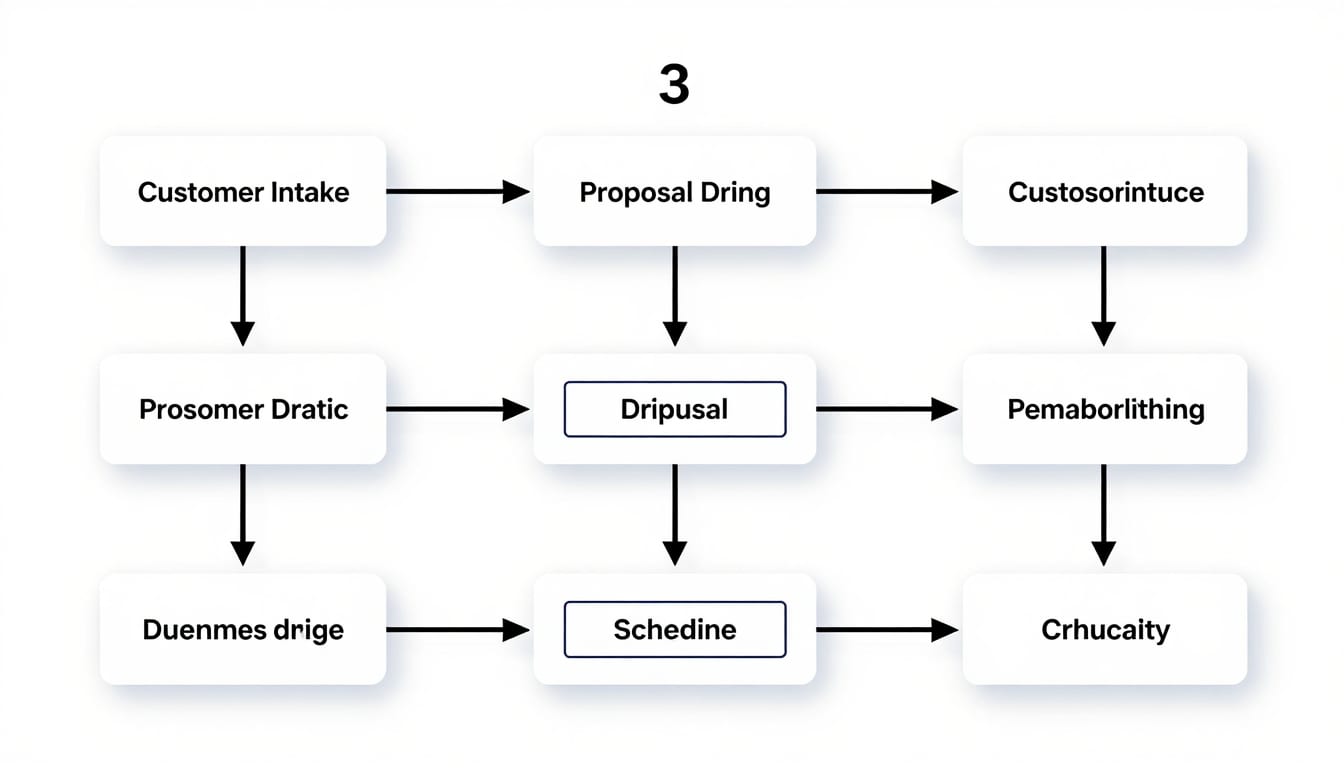
A multi-agent intake pipeline automates this handoff in seconds using three distinct agents:
- The Classification Agent: Reads the incoming message, determines intent (quote request, billing inquiry, support ticket), and extracts key details like project budget or urgency.
- The Verification Agent: Checks your CRM or customer database to see if the contact is an existing client or a new prospect.
- The Dispatch Agent: Automatically drafts a personalized confirmation email, creates a deal in your pipeline, and pings the appropriate account executive on Slack or Microsoft Teams.
Quick Tip: Set your dispatch agent to tag high-value leads with a special status so your sales team gets an instant mobile alert for opportunities over a specific revenue threshold.
2. Quote-to-Invoice Processing
Transforming an accepted customer proposal into an accurate invoice and a scheduled work order often requires opening four different software tabs. A multi-agent network streamlines this entire financial sequence.
- The Document Extraction Agent: Pulls line items, agreed hourly rates, and client billing addresses directly from signed contracts.
- The Accounting Agent: Creates the draft invoice in QuickBooks or Xero and cross-references tax rates based on client jurisdiction.
- The Scheduling Agent: Populates project milestones in your team's project management tool (such as ClickUp or Asana) based on the scope defined in the quote.
By decoupling data extraction from invoice generation, you eliminate manual typo risks and ensure your accounting ledger stays synchronized with real-time operations.
3. Vendor and Supplier Tracking
If your business relies on physical inventory, sub-contractors, or specialized material orders, tracking delivery updates eats hours of weekly administrative time. Dedicated tracking agents can manage this entire supply chain pulse.
- The Order Monitor Agent: Scans supplier confirmation emails and extracts estimated delivery dates and tracking numbers.
- The Exception Flagging Agent: Compares tracking updates against your internal production calendar and flags delays that threaten client deadlines.
- The Follow-up Agent: Drafts polite, automated status request emails to vendors whenever an order status remains unupdated for more than 48 hours.
Common Pitfall: Never allow an automated follow-up agent to send vendor cancellation notices or payment disputes automatically. Always route negative financial exceptions to a human manager for review.
How Can You Coordinate No-Code AI Agents Without Writing Code?
Connecting multiple autonomous software workers sounds like an advanced engineering project, but visual workflow platforms have made business process automation with AI accessible to non-technical teams. You do not need to write Python scripts or maintain complex cloud infrastructure.
The foundation of coordinating multiple agents lies in establishing clear triggers, standard data formats, and strict human oversight points.
Step 1: Map Clear Handoff Triggers
Every agent in your pipeline needs an explicit trigger and a structured output. Agent A should only start working when a specific event happens, and its output must serve as the clean input for Agent B.
Instead of passing raw, unstructured text between agents, instruct your reasoning nodes to return standardized JSON objects. This prevents downstream agents from misinterpreting instructions.
Modern platforms like Make, Zapier, and n8n act as the central nervous system connecting your no-code AI agents. These visual workflow builders allow you to drag and drop logic blocks that link your existing software stack.
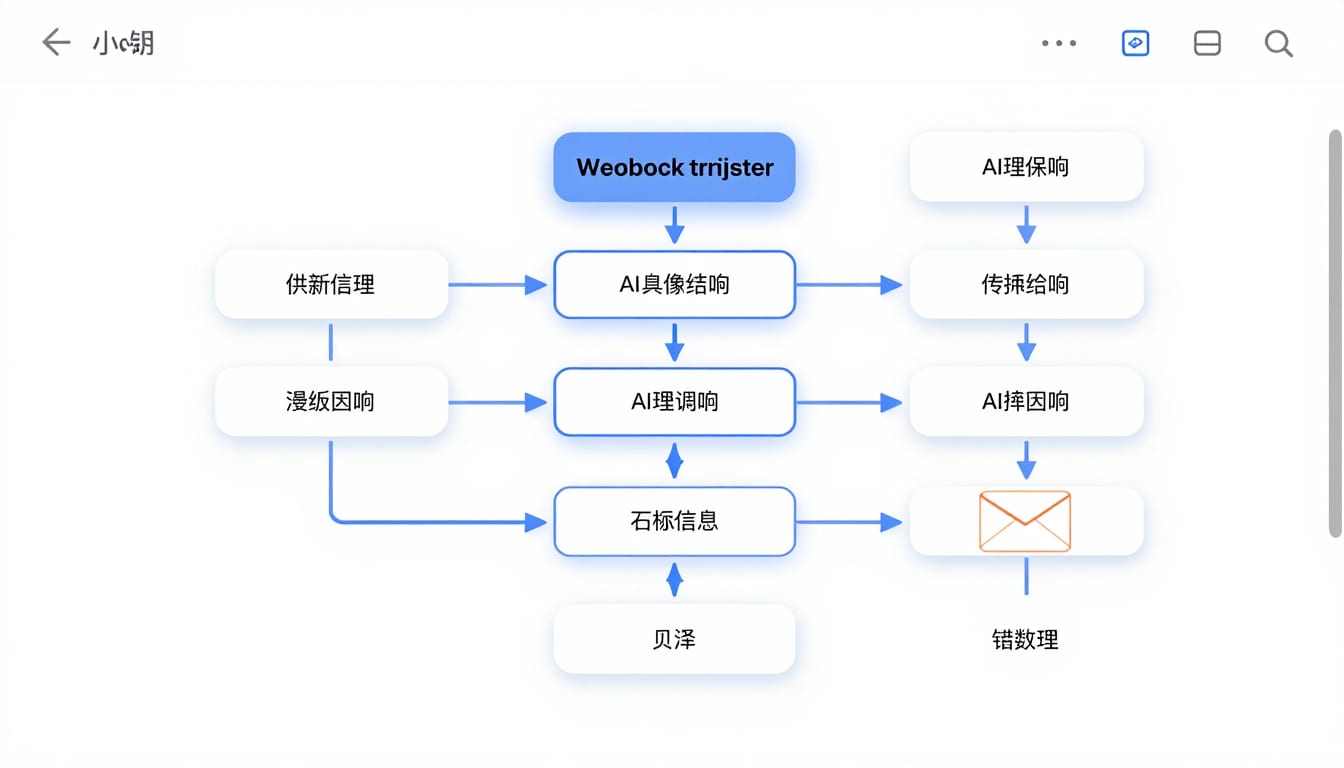
A typical multi-agent automation flow inside a visual builder looks like this:
- Trigger Module: Webhook catches a new form submission on your website.
- Agent 1 (AI Node): Analyzes the submission text and outputs a structured category and summary.
- Router Module: Directs the workflow path based on Agent 1's classification.
- Agent 2 (AI Node): Drafts a customized response email tailored to that specific category.
- Action Module: Saves the drafted email into your Gmail drafts folder for review.
Step 3: Establish Human-in-the-Loop Checkpoints
An autonomous system is only as good as its safety controls. For any workflow involving money, client commitments, or sensitive contracts, include a mandatory human verification step.
Rather than sending an automated email directly to a client, have your agent draft the reply and send a notification to your Slack or Teams channel with two buttons: "Approve and Send" or "Edit Draft." This gives your team 100% control while saving 90% of the drafting effort.
How Can Your Business Build Its First Agent Network in 4 Steps?
Building an effective operational AI strategy does not require a complete back-office digital transformation. Small businesses achieve the highest return on investment by starting with a single two-agent pilot before expanding across other departments.
At CodeRift, our engineers have audited and implemented automated workflows across dozens of service and retail businesses. The companies that succeed follow a disciplined, four-step rollout process.
Follow this blueprint to launch your first multi-agent workflow safely and effectively:
- 1. Conduct a 30-Minute Repetitive Task Audit: Sit down with your team and list the top three administrative bottlenecks that require copying information from one app into another. Choose the simplest linear process for your initial pilot.
- 2. Define Rigid Inputs and Outputs for Each Agent: Write out a single-page job description for each agent. Define exactly what data it receives, the precise formatting rules it must follow, and what constitutes a failed output.
- 3. Build the Pipeline with Human Approvals: Connect your tools using a visual automation platform. Always configure client-facing steps to route through an employee approval checkpoint during the first 30 days of operation.
- 4. Measure Time Saved and Iterate: Track your weekly administrative hours before and after deploying the agent network. Once the initial pipeline runs with zero errors for a month, remove manual checkpoints on low-risk tasks and move on to your next operational bottleneck.
If your internal team lacks the technical bandwidth to map these system architectures, explore our specialized workflow automation services or check out our transparent implementation pricing to see how we accelerate your deployment.
Key Takeaways for Small Business AI Operations
- Specialized agents outperform monolithic bots: Assigning one discrete task to each AI agent drastically reduces hallucinations and improves overall workflow reliability.
- Multi-agent systems create digital assembly lines: Linking focused agents together allows small businesses to automate complex, multi-step back-office procedures.
- No-code tools remove technical barriers: You can build, deploy, and manage sophisticated agent pipelines using visual workflow builders like Make or Zapier without writing code.
- Human-in-the-loop oversight is non-negotiable: Keep team members in control of high-stakes financial, legal, and client-facing decisions via quick approval checkpoints.
- Start small and expand modularly: Automate one two-agent handoff first, validate its accuracy, and systematically add new agents as your operational needs grow.
Frequently Asked Questions About AI Agents for Small Business
How much does it cost to deploy multi-agent workflow automation?
For most small businesses, the ongoing software cost of running a multi-agent network is surprisingly low. A reliable setup utilizing visual automation tools (such as Make or Zapier) combined with modern AI model APIs typically costs between $30 and $150 per month in usage fees, depending on your transaction volume.
Do operational AI agents replace existing employees?
No. In small businesses, AI agents are designed to eliminate administrative drudgery—such as data entry, basic email routing, and document cross-referencing—rather than replace staff. By automating these low-value tasks, your existing team gains back 10 to 20 hours per week to focus on client delivery, sales outreach, and core operations.
Is our proprietary business data safe when using AI agents?
Yes, provided you configure your architecture correctly. When integrating commercial AI models via dedicated developer APIs (rather than consumer-facing chat interfaces), your business data is not used to train public foundation models. Always ensure your automation pipelines utilize encrypted connections and strict role-based access permissions.
Ready to remove administrative bottlenecks and streamline your back office with purpose-built automation? Read more real-world operational guides on our tech and operations blog, or reach out to our team directly to discuss your specific requirements. You can also book a free workflow audit call with CodeRift today to identify the highest-ROI automation opportunities inside your business.